Trust in institutions is declining rapidly due to growing perceptions of corruption, lack of transparency, and widening inequality. Social media amplifies scandals and erodes credibility.
Political polarization deepens skepticism, while economic instability fuels frustration. Younger generations demand accountability and inclusivity, but often feel ignored.
These forces weaken confidence in governments, media, and corporations, reshaping modern society’s relationship with authority.
Learn what’s driving the sharp decline in trust in institutions, including scandals, polarization, economic inequality, and the impact of digital media.
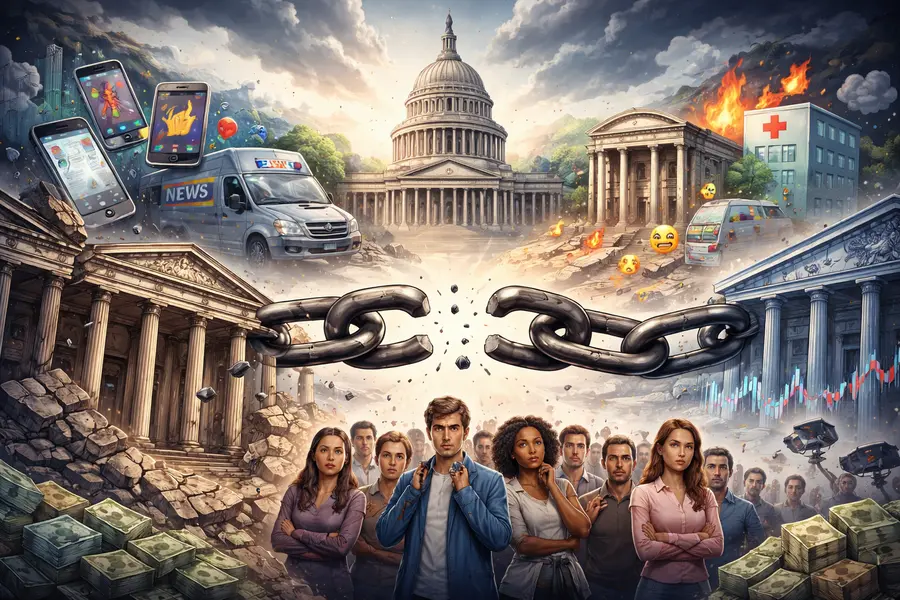
Why Is Trust in Institutions Declining So Rapidly in Modern Society — Causes and Consequences
Trust is the invisible glue that holds societies together. From governments and media to banks, healthcare systems, and even educational institutions, people rely on these structures to function fairly and effectively. Yet, across the world, that trust is eroding—and fast.
Many individuals now question whether institutions truly serve the public or prioritize their own interests. This growing skepticism isn’t happening in isolation; it’s fueled by rapid technological change, political polarization, economic inequality, and a steady stream of scandals and misinformation. What once felt stable and dependable now feels uncertain and, at times, even deceptive.
Understanding why this shift is happening is crucial, because when trust breaks down, cooperation weakens, and societies become more fragmented.
Let’s explore the key reasons behind the decline in institutional trust and what it means for the future.
The Impact of Constant Information Overload
In today’s digital age, people are bombarded with information every second. News updates, social media posts, and opinion pieces flood screens nonstop, making it difficult to separate fact from fiction. While access to information has increased transparency, it has also created confusion.
Contradictory narratives often coexist, leaving individuals unsure about what to believe. This uncertainty weakens confidence in institutions that were once considered reliable sources of truth.
When people encounter multiple versions of the same story, they begin to question whether institutions are being honest or manipulating information.
Over time, this constant exposure to conflicting content creates fatigue and skepticism, leading individuals to trust their own instincts—or their immediate social circles—more than established authorities.
Rising Political Polarization
Political divisions have deepened significantly in recent years, shaping how people view institutions.
When institutions appear aligned with one political ideology, those who disagree feel excluded or even betrayed. This perception of bias undermines trust, as people expect institutions to serve everyone equally.
Political leaders and parties often amplify these divisions, framing institutions as either allies or enemies. As a result, trust becomes conditional rather than universal. Instead of being seen as neutral entities, institutions are viewed through a partisan lens.
This environment makes it difficult for institutions to maintain credibility, as every action is interpreted as politically motivated.
The more polarized society becomes, the harder it is for institutions to rebuild a shared sense of trust.
Read Here: How Social Media Contributes to Political Polarization
High-Profile Scandals and Corruption
Nothing damages trust faster than scandal. Whether it involves financial fraud, misuse of power, or ethical misconduct, high-profile cases leave lasting impressions on the public. Even if such incidents involve a small number of individuals, they often taint the reputation of entire institutions.
People begin to question whether these cases are exceptions or signs of deeper systemic problems.
The repeated exposure to scandals reinforces the belief that institutions are self-serving rather than accountable. Additionally, when consequences appear weak or delayed, it further erodes confidence.
People expect transparency and justice, and when those expectations are not met, skepticism grows. Over time, even institutions with strong track records struggle to regain credibility after repeated public failures.
Economic Inequality and Perceived Unfairness
Economic disparities play a major role in shaping public trust. When people feel that systems are unfair or rigged in favor of the wealthy, they lose faith in institutions designed to ensure fairness.
Wage stagnation, rising living costs, and limited opportunities contribute to a sense of frustration.
Many individuals believe that institutions prioritize corporate interests over public welfare, reinforcing the idea that the system is not working for everyone. This perception creates a divide between those who benefit from institutions and those who feel left behind.
Trust erodes when people no longer see institutions as protectors of equality and opportunity. Instead, they are viewed as mechanisms that maintain existing power structures, deepening feelings of alienation and distrust.
The Role of Social Media Amplification
Social media has transformed how people interact with information and institutions. While it allows for greater participation and expression, it also amplifies negative narratives.
Controversies, criticisms, and sensational stories spread faster than balanced or positive news.
Algorithms often prioritize engagement, which means emotionally charged content gains more visibility. This creates an environment where distrust can grow rapidly.
People are more likely to encounter stories that reinforce skepticism rather than confidence. Additionally, misinformation and disinformation can spread unchecked, further damaging institutional credibility.
As individuals rely more on social media for news, their perception of institutions becomes shaped by these amplified narratives. This dynamic accelerates the decline of trust in ways that were not possible before.
Read Here: How Does Digital Inequality Affect Education and Economic Growth?
Decline of Traditional Authority Figures
In the past, authority figures such as community leaders, educators, and public officials commanded a high level of respect. Today, that automatic respect has diminished.
People are more inclined to question authority rather than accept it. This shift is partly due to increased access to information, which empowers individuals to form their own opinions. While this independence can be positive, it also challenges the legitimacy of institutions that rely on authority and expertise.
When authority is constantly questioned, institutions must work harder to justify their decisions and actions. This ongoing scrutiny can weaken their ability to maintain trust, especially if they fail to communicate effectively.
The decline of unquestioned authority marks a significant cultural shift in modern society.
Max Weber explains three types of authority—traditional, charismatic, and legal-rational. Traditional authority is based on customs and long-standing practices.
Lack of Transparency and Communication
Transparency is essential for building trust, yet many institutions struggle to communicate openly. Complex processes, unclear decision-making, and limited public engagement create a sense of distance between institutions and the people they serve.
Transparency is difficult because institutions fear vulnerability, prioritize control, face cultural barriers, and struggle with consistent honest communication.
When individuals feel excluded or uninformed, they are more likely to assume the worst. Even well-intentioned actions can be misinterpreted if they are not clearly explained. In contrast, transparency fosters understanding and accountability.
Institutions that fail to prioritize open communication risk appearing secretive or untrustworthy. This perception can quickly spread, especially in a digital environment where information travels rapidly.
To maintain trust, institutions must not only act responsibly but also ensure that their actions are visible and understandable to the public.
Changing Expectations in a Digital World
Modern society operates at a faster pace than ever before, and expectations have evolved accordingly.
People now expect instant responses, real-time updates, and personalized engagement from institutions. However, many institutions are not equipped to meet these demands.
Delays, inefficiencies, and outdated systems can create frustration and dissatisfaction. When expectations are not met, trust declines. Additionally, digital platforms have set new standards for transparency and responsiveness, making traditional institutions seem slow or disconnected.
This gap between expectation and reality contributes to a perception that institutions are out of touch with modern needs.
To rebuild trust, institutions must adapt to the digital landscape and align their operations with the expectations of a more connected and informed public.
Cultural Shift Toward Individualism
Society has gradually shifted toward greater individualism, emphasizing personal choice and independence. While this trend empowers individuals, it also reduces reliance on collective systems and institutions.
People are more likely to trust their own experiences or the opinions of their immediate networks rather than established authorities. This mindset can weaken the perceived importance of institutions in everyday life.
A significant global cultural shift toward individualism—prioritizing personal autonomy, self-fulfillment, and independence—has been observed over the past few decades, often accompanied by complex changes in trust in institutions.
As individuals prioritize personal judgment, institutional guidance becomes less influential. This shift does not necessarily mean institutions are failing, but it does change how they are perceived.
Trust is no longer assumed; it must be earned continuously. Institutions that fail to adapt to this cultural shift risk becoming irrelevant in the eyes of a more self-reliant population.
Global Crises and Institutional Responses
Global crises, such as pandemics, economic downturns, and environmental challenges, test the effectiveness of institutions. During these times, people closely observe how institutions respond.
Delays, inconsistencies, or perceived mismanagement can significantly damage trust. Even when institutions act with good intentions, the complexity of crises can lead to outcomes that disappoint the public.
These experiences shape long-term perceptions, influencing how people view institutional competence and reliability. When expectations are high and results fall short, trust erodes quickly.
On the other hand, effective and transparent responses can strengthen confidence. The way institutions handle crises plays a crucial role in determining whether trust is rebuilt or further diminished in modern society.
Conclusion
The rapid decline of trust in institutions reflects a complex interplay of social, political, and economic forces.
Widespread perceptions of corruption, lack of transparency, and unequal systems have eroded confidence in governments, corporations, and media alike.
The rise of digital platforms amplifies scandals and misinformation, deepening skepticism. Generational shifts further demand accountability and inclusivity, yet many feel unheard.
As consequences unfold, rebuilding trust requires genuine reforms, open communication, and a renewed commitment to fairness and integrity across all institutions.