Digital platforms are reshaping social inequality by widening opportunity for some while deepening exclusion for others—often at the same time.
Explore the digital divide, gig economy, algorithms, and platform capitalism’s real impact.
How Are Digital Platforms Reshaping Social Inequality?
Scroll through your phone for five minutes and you’ll see it: digital platforms are no longer just tools—they are environments where we work, learn, shop, vote, date, and build identities.
From gig apps to social media, online marketplaces to AI-driven hiring systems, platforms now shape who gets visibility, income, influence, and opportunity. While technology once promised a more equal world, the reality is more complex.
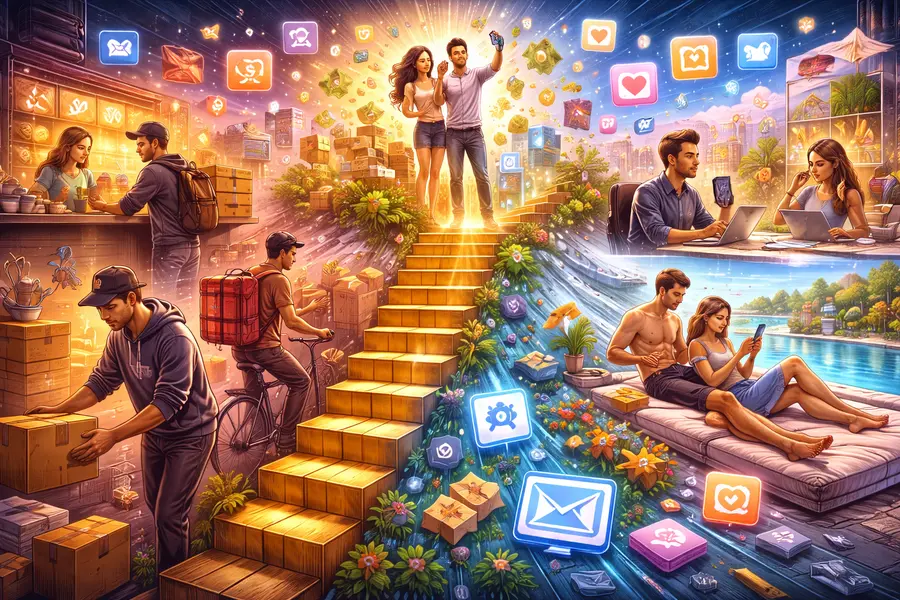
For some, digital platforms have unlocked unprecedented mobility, entrepreneurship, and global reach. For others, they have reinforced economic precarity, algorithmic bias, surveillance, and digital exclusion.
So how exactly are digital platforms reshaping social inequality? Are they leveling the playing field—or quietly tilting it further?
In this article, we’ll explore the economic, social, cultural, and political ways platforms are transforming inequality. The story isn’t black and white. It’s layered, dynamic, and deeply connected to how power operates in the digital age.
The Digital Divide: Access Still Determines Opportunity
Before we talk about algorithms or online influence, we must start with access. The digital divide remains one of the strongest drivers of modern inequality.
Reliable internet, high-speed broadband, updated devices, and digital literacy are not evenly distributed.
Rural communities, low-income households, and marginalized groups often lack stable connectivity. Without access, participation becomes impossible.
Digital platforms increasingly function as gateways to employment, education, government services, and financial systems. Job applications, telehealth, online banking, and even social welfare programs are now platform-based. Those without consistent access are effectively excluded from essential opportunities.
But inequality isn’t just about having the internet—it’s about quality. A slow connection limits remote work. Shared devices restrict online learning. Limited digital literacy reduces confidence in navigating systems. In this way, platforms amplify pre-existing inequalities. Those who begin with advantages—education, income, digital fluency—benefit most. Those without them fall further behind.
The platform economy doesn’t eliminate inequality; it often mirrors and magnifies it.
Read Here: How Digital Inequality Impacts Education and Economic Growth
Gig Economy: Flexibility or Digital Precarity?
Platforms like Uber, DoorDash, and Upwork have redefined work. They promise flexibility—be your own boss, choose your hours, earn on demand. For many, especially those excluded from traditional employment, gig platforms provide immediate income and entry into the workforce.
But flexibility comes at a cost. Gig workers are often classified as independent contractors, meaning no health insurance, no paid leave, no job security, and little legal protection. Income is volatile and controlled by opaque algorithms. A sudden account suspension can erase someone’s livelihood overnight.
Platform rating systems also shift power to customers, increasing emotional labor and performance pressure. Workers must constantly maintain high ratings to survive.
While digital platforms expand economic participation, they also create new forms of labor insecurity. The result is a paradox: more opportunity, but less stability. For many, the gig economy doesn’t eliminate inequality—it restructures it in digital form.
Read Here: The Social Dynamics of Gig Economy Labor Today
Algorithmic Bias: When Code Reinforces Inequality
Algorithms decide what we see, who gets hired, which content goes viral, and even who qualifies for loans. These systems are often perceived as neutral. In reality, they reflect the data used to train them—and that data carries historical inequalities.
Hiring algorithms can replicate past discrimination. Facial recognition systems have shown higher error rates for darker skin tones. Content moderation tools may disproportionately silence certain communities. Because platforms rely heavily on automation, these biases scale rapidly.
The problem isn’t malicious code—it’s embedded inequality. When algorithms optimize for engagement or profit, they can amplify sensational content over balanced information. When predictive systems rely on historical data, they reproduce systemic patterns.
The result is subtle but powerful. Decisions once made by individuals are now embedded in digital systems that are harder to question and harder to audit. Inequality becomes less visible—but more structural.
Digital platforms don’t just host inequality; through algorithms, they can institutionalize it.
Social Media and the Attention Economy
Platforms like Instagram, TikTok, and YouTube operate on attention. Visibility is currency. Those who capture engagement gain influence, sponsorships, and income.
In theory, social media democratizes fame. Anyone with creativity can go viral. In practice, success often depends on existing resources—professional equipment, time to create content, marketing skills, and cultural capital. Influencer economies tend to reward beauty standards, language dominance, and trends aligned with mainstream audiences.
Moreover, algorithms prioritize content that keeps users scrolling. This can favor extreme opinions, curated lifestyles, or emotionally charged narratives. Marginalized voices may struggle to break through unless they align with platform incentives.
The attention economy reshapes inequality by linking visibility to economic opportunity. Social status becomes quantifiable—followers, likes, shares. For some, platforms are launchpads. For others, they are spaces of comparison, pressure, and invisibility.
Attention, in the digital age, is power—and not everyone receives it equally.
Platform Capitalism and Wealth Concentration
Digital platforms often follow a winner-takes-all model. Companies like Amazon, Meta, and Google dominate markets through network effects. The more users they attract, the stronger they become.
This concentration of power reshapes inequality at a macro level. A small number of firms control massive data flows, advertising markets, cloud infrastructure, and digital ecosystems. They accumulate wealth at extraordinary speed, contributing to widening gaps between tech elites and the broader workforce.
Small businesses often depend on these platforms to survive, yet remain vulnerable to sudden policy changes or algorithm shifts. Sellers on large marketplaces can lose visibility overnight. Creators can see income vanish after an update.
Platform capitalism centralizes control while distributing risk downward. Wealth concentrates at the top—among shareholders and executives—while everyday users supply data, labor, and attention.
The digital economy creates immense value, but the distribution of that value remains deeply unequal.
Education Platforms: Equal Access or New Barriers?
Online learning platforms expanded dramatically during global disruptions. Platforms like Coursera and Khan Academy have made courses from top institutions accessible worldwide.
This shift offers undeniable benefits. Students in remote regions can access high-quality lectures. Professionals can reskill at lower costs. Educational content is more abundant than ever.
However, inequality persists beneath the surface. Completion rates for online courses are often higher among already educated learners. Self-paced models require discipline, time, and stable environments—luxuries not everyone has. Certification fees can still be barriers.
Additionally, elite branding continues to matter. A certificate from a prestigious university often carries more weight than a generic online course, even if the content is similar.
Digital education platforms expand access, but they don’t automatically equalize outcomes. Without support systems, mentorship, and recognition structures, online education can replicate offline hierarchies.
Access to knowledge has widened. Access to opportunity remains uneven.
Data as Power: Surveillance and Inequality
Data is often called the new oil, but it is also a new form of power. Digital platforms collect vast amounts of behavioral information—location, preferences, purchasing habits, and social networks.
This data shapes advertising, credit scoring, insurance pricing, and political messaging. Those with less digital literacy may unknowingly trade privacy for access. Marginalized communities are often more exposed to predatory advertising or exploitative financial offers.
Surveillance is not distributed equally. Low-income workers in gig platforms face constant tracking. Warehouse employees are monitored for productivity. Meanwhile, wealthier users can afford privacy tools or legal protections.
When data determines opportunity—who gets a loan, which job ads appear, what housing listings are shown—inequality becomes embedded in invisible digital processes.
Control over data means control over outcomes. And in the platform economy, that control largely belongs to corporations rather than individuals.
Data inequality is quietly becoming one of the defining inequalities of our time.
Digital Activism and New Forms of Resistance
Despite these challenges, digital platforms also empower collective action. Hashtags mobilize movements. Online petitions gather support across borders. Grassroots campaigns can gain global visibility in hours.
Digital activism lowers barriers to participation. Individuals who once lacked media access can now document injustice, share stories, and organize communities. Platforms amplify voices that traditional institutions ignored.
However, digital activism faces obstacles. Algorithms may suppress political content. Online harassment can silence activists. Platform policies shift unpredictably. Movements that begin online still require offline change to create structural impact.
Even so, platforms reshape inequality not only by reinforcing it—but by creating tools to challenge it. Visibility, storytelling, and network-building become instruments of resistance.
The future of social inequality will depend on how platforms are governed, regulated, and redesigned. Technology alone does not determine outcomes. Human choices—about ethics, policy, and inclusion—do.
Digital platforms are reshaping inequality. The question is whether we allow them to deepen divides—or push them to build a more equitable digital world.
FAQs
1. How do digital platforms increase social inequality?
Digital platforms can increase inequality by reinforcing the digital divide, concentrating wealth in large tech companies, enabling precarious gig work, and embedding bias into algorithms that influence hiring, credit, and visibility.
2. What is the digital divide and why does it matter?
The digital divide refers to unequal access to reliable internet, devices, and digital skills. It matters because access to jobs, education, healthcare, and financial services increasingly depends on digital connectivity.
3. How does the gig economy affect economic inequality?
The gig economy offers flexible income opportunities but often lacks job security, benefits, and labor protections. This can increase income instability and widen economic inequality over time.
4. Do algorithms contribute to social inequality?
Yes. Algorithms trained on biased data can replicate discrimination in hiring, lending, content moderation, and facial recognition, making inequality less visible but more systemic.
5. Can digital platforms reduce inequality?
Digital platforms can reduce inequality by expanding educational access, enabling entrepreneurship, and amplifying marginalized voices. However, without regulation and inclusive design, benefits remain uneven.
6. What is platform capitalism?
Platform capitalism refers to an economic model where large digital platforms dominate markets through network effects, data control, and centralized infrastructure, often concentrating wealth and power.
7. How does social media impact economic opportunity?
Social media can create income streams through influencing, marketing, and content creation. However, algorithm-driven visibility often favors those with existing resources and advantages.
8. Why is data considered a new form of inequality?
Data is power in the digital economy. Companies that control user data influence advertising, pricing, hiring, and political messaging, creating structural advantages over individuals.