Public sociology isn’t locked away in journals—it’s alive in conversations, policies, media, and grassroots movements. It’s research with real-world impact.
Public sociologists dive into issues like poverty, gender bias, racial injustice, labor rights, and education gaps. They turn complex data into clear, relatable insights that empower communities to challenge unfair systems. They amplify marginalized voices and question dominant narratives.
Public sociology transforms knowledge into action, driving accountability and shaping a more inclusive, equitable society.
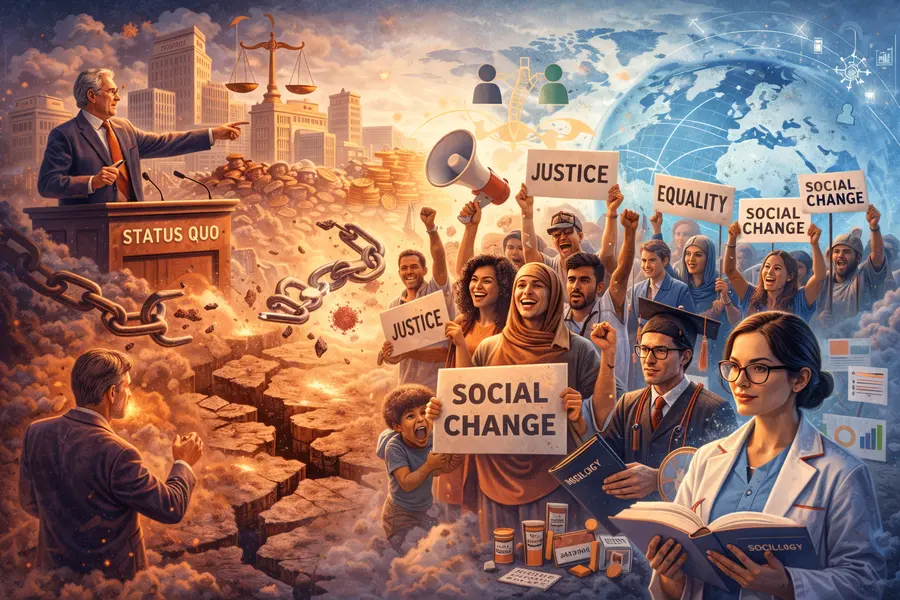
How Does Public Sociology Disrupt the Status Quo for Social Equity? Explained
Public sociology is a branch of sociology that connects academic research with the wider public to address real-world social issues.
At its core, public sociology takes academic research out of universities and places it directly into public conversations, policymaking, activism, and community life.
Instead of limiting sociological knowledge to journals and classrooms, public sociologists engage with real-world issues like inequality, discrimination, poverty, gender justice, labor rights, and racial disparities. This approach challenges entrenched systems of power by making knowledge accessible, actionable, and accountable.
Public sociology is not just about studying society; it is about transforming it. By collaborating with communities, media platforms, grassroots organizations, and policymakers, public sociologists amplify marginalized voices and challenge dominant narratives. They question who benefits from the current system and who is left behind. In doing so, they disrupt traditional hierarchies of knowledge and power.
Ultimately, public sociology acts as a bridge between research and reform, pushing society toward greater fairness, inclusion, and social equity.
Making Knowledge Accessible Beyond Academia
One of the most powerful ways public sociology disrupts the status quo is by breaking the monopoly of knowledge.
Traditionally, academic research has been locked behind paywalls, technical jargon, and institutional barriers.
Public sociology challenges this by translating complex theories into clear, relatable language that everyday people can understand and use.
When research on poverty, gender inequality, or caste discrimination becomes accessible, communities gain tools to advocate for themselves.
Accessible knowledge empowers people to question unjust policies and demand change. It also democratizes expertise, shifting authority away from elite institutions and toward broader society.
By writing op-eds, hosting public lectures, participating in podcasts, and engaging on social media, public sociologists bring evidence-based insights into mainstream dialogue. This transparency reduces misinformation and strengthens civic participation.
In this way, public sociology transforms knowledge from a private asset into a public good, directly contributing to social equity.
Amplifying Marginalized Voices
Public sociology actively centers the experiences of marginalized communities. Rather than speaking for people, public sociologists often collaborate with communities to co-produce knowledge. This participatory approach disrupts traditional power dynamics in research, where scholars historically defined problems without community input.
When marginalized voices are amplified, hidden inequalities become visible. For example, research on informal labor, domestic work, or rural displacement often highlights systemic injustices overlooked by mainstream policy debates. By bringing these lived experiences into public discourse, public sociology challenges dominant narratives that normalize inequality.
Amplification also builds solidarity. When stories of discrimination and resilience reach broader audiences, empathy increases and collective action becomes possible.
Public sociology ensures that those most affected by social problems are not silenced. Instead, their insights shape conversations about reform. In doing so, it confronts structural inequality at its roots and pushes institutions toward accountability and inclusion.
Influencing Public Policy Through Evidence
Public sociology disrupts the status quo by informing policy with rigorous, evidence-based research. Policymaking often reflects political interests rather than social realities.
Public sociologists intervene by presenting data that reveals the consequences of inequality in housing, healthcare, education, and employment.
When policymakers engage with sociological research, policies can shift from reactive to preventative. For example, studies on systemic poverty show that structural factors—such as wage stagnation and unequal schooling—drive inequality more than individual behavior. Public sociology reframes the narrative from blame to systemic reform.
By serving on advisory boards, testifying before legislative bodies, and collaborating with civil society organizations, public sociologists insert research into decision-making spaces. Their work holds governments accountable to empirical evidence. This evidence-based influence disrupts entrenched systems that perpetuate inequity, ensuring policies reflect social justice rather than political convenience.
Challenging Dominant Narratives and Myths
Social inequality often persists because it is justified through myths. Public sociology confronts these myths head-on.
Narratives such as “meritocracy guarantees success” or “poverty results from laziness” obscure structural barriers. Public sociologists use research to dismantle these simplified explanations.
By exposing how race, caste, gender, and class shape opportunities, public sociology shifts public understanding from individual blame to systemic analysis. This reframing disrupts the status quo because it challenges widely accepted beliefs that protect privilege.
Through media appearances, essays, and community forums, sociologists encourage critical thinking. They invite audiences to question taken-for-granted assumptions. When myths lose their credibility, space opens for new policies and cultural shifts.
In essence, public sociology rewrites the social script. It replaces narratives that legitimize inequality with evidence that calls for fairness and justice, creating a foundation for long-term social equity.
Bridging Activism and Academia
Public sociology builds bridges between scholars and activists. Historically, academia and grassroots movements have operated in separate spheres.
Public sociology disrupts this separation by fostering collaboration. Researchers provide data and theoretical frameworks, while activists contribute lived experience and mobilizing power.
This partnership strengthens social movements. For instance, data on wage gaps or housing discrimination can support legal challenges and public campaigns. Evidence adds credibility and urgency to advocacy efforts.
At the same time, activists help scholars remain grounded in real-world concerns. This mutual exchange prevents research from becoming detached from social realities. They create strategies rooted in both evidence and experience.
By uniting knowledge and action, public sociology accelerates progress toward equity. It transforms scholarship into a tool for change rather than a purely intellectual exercise.
Engaging Media and Digital Platforms
In today’s digital age, public sociology leverages media platforms to disrupt inequity. Social media, blogs, podcasts, and online forums allow sociologists to reach global audiences instantly. This visibility counters misinformation and promotes fact-based discussion.
Digital engagement broadens participation. People who may never attend academic conferences can access research summaries or live discussions. Public sociology uses storytelling and multimedia tools to make complex topics relatable.
Media engagement also pressures institutions. When research highlighting injustice gains public attention, leaders face increased scrutiny. Public awareness often drives reform faster than closed-door negotiations.
Read Here: The Sociology of Cancel Culture and Social Norms
FAQs
What is public sociology?
Public sociology is an approach to sociology that connects academic research with public audiences, policymakers, activists, and communities. It focuses on making sociological knowledge accessible and actionable to address social inequality, injustice, and systemic power imbalances. Instead of staying within universities, public sociology engages real-world issues to promote social equity and democratic participation.
How does public sociology promote social equity?
Public sociology promotes social equity by translating research into public conversations, influencing policy decisions, amplifying marginalized voices, and challenging dominant narratives that justify inequality. It empowers communities with evidence-based knowledge and encourages civic engagement to create fairer social systems.
Why is public sociology important in modern society?
Public sociology is important because misinformation, inequality, and political polarization often distort public understanding of social problems. By providing credible research and inclusive dialogue, public sociology strengthens democracy, accountability, and evidence-based policymaking.
What is the difference between traditional sociology and public sociology?
Traditional sociology primarily focuses on academic research and scholarly audiences. Public sociology extends that research into public debates, media platforms, and policymaking spaces. While traditional sociology generates knowledge, public sociology applies and communicates it for social change.
Can public sociology influence public policy?
Yes, public sociology can influence public policy by providing empirical research, serving as expert advisors, collaborating with advocacy groups, and participating in public hearings. Evidence-based insights help shape fair and inclusive policies that address systemic inequality.
How does public sociology disrupt the status quo?
Public sociology disrupts the status quo by challenging dominant narratives, exposing structural inequalities, democratizing knowledge, and holding institutions accountable. It shifts power from elite academic circles to broader communities.
Who benefits from public sociology?
Marginalized communities, policymakers, activists, educators, and the general public benefit from public sociology. It provides accessible knowledge that supports advocacy, reform, and inclusive policymaking.
Is public sociology connected to activism?
Public sociology often collaborates with activists and community organizations. While it remains research-based, it supports social justice initiatives by supplying data, analysis, and critical frameworks.
What role does media play in public sociology?
Media platforms amplify sociological research, helping it reach broader audiences. Public sociologists use blogs, interviews, podcasts, and social media to promote informed discussions about inequality and justice.
Does public sociology strengthen democracy?
Yes. By encouraging informed civic engagement, promoting accountability, and making research accessible, public sociology strengthens democratic participation and transparency.