Struggling with cold-chain costs? Traditional lithium batteries hate the freezing cold, losing power and charging slowly in sub-zero warehouses. CATL’s sodium-ion batteries are changing the game.
CATL sodium-ion batteries maintain 90% capacity in extreme cold, support ultra-fast charging and eliminate the need for expensive heaters and boost your fleet’s uptime. They’re also cheaper and more sustainable than lithium.
Switching to sodium-ion technology is a smart way to slash operational expenses and build a more efficient, future-ready supply chain.
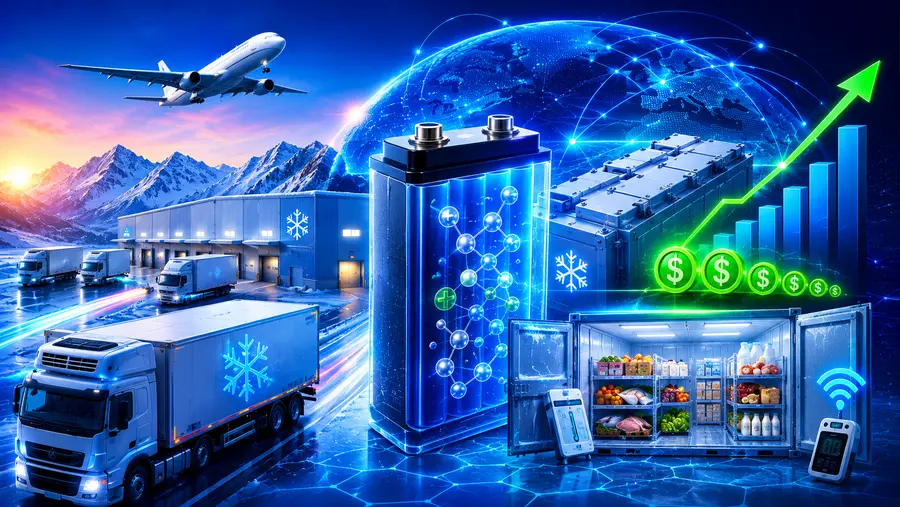
How CATL Sodium-Ion Batteries Cut Cold-Chain Supply Costs: Decoded
The cold-chain logistics industry is the invisible backbone of our modern world. From keeping life-saving pharmaceuticals stable during global transit to ensuring the fresh produce in your local grocery store doesn’t spoil, the cold chain never sleeps. But it has a massive, expensive problem: keeping things freezing cold requires an immense amount of energy.
For years, the industry has relied on lithium-ion batteries to power everything from electric refrigerated trucks to the forklifts operating inside sub-zero warehouses. However, lithium-ion technology has a fatal flaw—it hates the cold. When temperatures drop below freezing, lithium batteries lose power, charge slowly, and require expensive internal heating systems just to function.
Enter the sodium-ion battery (SIB). Pioneered by energy storage giants like Contemporary Amperex Technology Co., Limited (CATL), sodium-ion technology is actively disrupting the logistics space. By offering unparalleled low-temperature performance, a cheaper supply chain, and incredible safety, CATL’s sodium-ion batteries are systematically cutting costs across the cold-chain supply network.
Let’s break down exactly how sodium-ion batteries work, why they perform so well in freezing conditions, and the immense economic and environmental benefits they bring to the cold-chain industry.
The Freezing Challenge of Cold-Chain Logistics
Before we dive into battery technology, we need to understand the unique challenges of the cold chain. Operations in this sector routinely take place in environments ranging from 2°C (chilled) down to -30°C (deep freeze).
When a standard lithium-ion battery (LIB) is exposed to these extreme temperatures, several chemical and physical roadblocks occur:
- Sluggish Ion Movement: The liquid electrolytes inside the battery become viscous and thick, slowing down the movement of lithium ions.
- Capacity Loss: At -20°C, many lithium-ion batteries can lose up to 50% of their operational capacity. A forklift that normally runs for eight hours might only last four.
- Lithium Plating: Charging a lithium battery in sub-zero temperatures can cause metallic lithium to build up on the anode, permanently damaging the battery and creating severe fire risks.
To bypass these issues, logistics companies have to install heavy, energy-draining thermal management systems. Essentially, they have to spend battery power just to keep the battery warm enough to provide power. This vicious cycle drives up the total cost of ownership (TCO) for cold-chain operators. The industry desperately needed a battery that could thrive in the cold, not just survive it.
What Are Sodium-Ion Batteries (SIBs)?
Sodium-ion batteries operate on the exact same fundamental “rocking-chair” principle as lithium-ion batteries. They store and release energy through coupled ionic and electronic transport, where sodium ions (Na+) migrate through an electrolyte between a cathode and an anode, while electrons flow through an external circuit to power your device (Machín, 2026).
However, replacing lithium with sodium introduces major advantages—and a few distinct engineering challenges:
- Abundance and Cost: Sodium is one of the most abundant elements on Earth. Unlike lithium, which requires complex mining operations and is concentrated in a few geographic regions, sodium can be extracted from seawater and common salt.
- Larger Ionic Radius: A sodium ion is physically larger than a lithium ion. Historically, this made it difficult for sodium ions to slide in and out of the battery’s electrodes without causing mechanical stress, which is why sodium batteries generally have a lower energy density than top-tier lithium ones (Bankole, 2026).
- Material Synergies: Because sodium doesn’t alloy with aluminum, SIBs can use cheap aluminum foil for both the positive and negative current collectors, whereas lithium batteries require much more expensive copper on the anode side.
While lithium still wears the crown for ultra-lightweight, high-energy applications (like long-range sports cars), sodium-ion batteries have emerged as a highly credible technology platform for stationary energy storage, micro-mobility, and heavy-duty industrial logistics (Bankole, 2026).
CATL’s Breakthrough in Sodium-Ion Technology
CATL, the world’s largest manufacturer of electric vehicle batteries, officially changed the landscape in 2021 when they unveiled their first-generation sodium-ion battery. They took a technology that had been largely confined to academic laboratories and scaled it for mass commercial production.
What made CATL’s announcement so groundbreaking for the cold chain were the specific performance metrics they achieved. Their sodium-ion cells were capable of charging to 80% capacity in just 15 minutes at room temperature. More importantly, the batteries could maintain 90% of their nameplate capacity at a staggering -20°C (Yang et al., 2023).
This was the silver bullet the cold-chain industry had been waiting for. CATL achieved this by engineering novel Prussian white and layered oxide cathode materials, paired with highly optimized hard carbon anodes. This combination allowed the larger sodium ions to flow freely without degrading the structural integrity of the battery.
The Secret to Low-Temperature Performance: Why Sodium Beats Lithium in the Cold
Why does sodium succeed in the freezing cold where lithium fails? The secret lies in the intricate chemistry of the battery’s electrolyte and how it interacts with the ions at low temperatures (LT).
Under extreme cold conditions, conventional electrolytes suffer from reduced conductivity, sluggish interfacial kinetics, and a dramatic increase in internal resistance. If the electrolyte gets too thick, the ions simply cannot travel fast enough to deliver power (Li, 2025).
Sodium-ion systems naturally possess properties that can be engineered to excel in the cold:
- Lower Desolvation Energy: Before an ion can enter an electrode, it has to shed its “shell” of electrolyte molecules—a process called desolvation. Sodium ions require significantly less energy to shed this shell compared to lithium ions. In a freezing environment where energy is scarce and reactions are slow, this low barrier to entry means sodium ions can keep moving efficiently.
- Optimized Low-Concentration Electrolytes: Recent research progress has allowed engineers to optimize SIB electrolytes specifically for extreme climates. By using low-freezing-point organic solvents and lowering the salt concentration, battery chemists can weaken the “solvent-separated ion pairs” (SSIP). This lowers the overall viscosity of the fluid, promoting rapid ion mobility and interfacial transport even at -20°C (Li, 2025).
- No Risk of Plating: Because of sodium’s electrochemical properties, the risk of metal plating on the anode during rapid cold-charging is vastly reduced compared to lithium, ensuring both safety and longevity in cold warehouses.
Key Takeaway: You don’t have to waste energy heating a sodium-ion battery to make it work. Its chemical architecture allows it to retain up to 90% of its power in deep-freeze environments, unlocking immense efficiency for refrigerated logistics.
How CATL Sodium-Ion Tech Transforms Cold-Chain Supply Efficiency
The transition from traditional lead-acid or lithium-ion batteries to CATL’s sodium-ion tech is not just a scientific upgrade; it is a massive financial pivot for supply chain operators. The cost reductions manifest in several distinct areas.
Direct Battery and Raw Material Costs
The most immediate cost saving comes from the sticker price of the battery itself. Because sodium is universally abundant, the raw material cost for SIBs is a fraction of that for LIBs. Furthermore, sodium batteries completely eliminate the need for cobalt and nickel—two expensive, price-volatile metals that are essential for high-performance lithium cathodes (Bankole, 2026). As manufacturing scales up, the upfront capital expenditure (CapEx) for a fleet of sodium-powered pallet jacks, forklifts, and refrigerated delivery vans will be notably lower than their lithium counterparts.
Elimination of Thermal Management Systems
As established, a lithium-ion battery in a -20°C freezer facility requires a thermal management system. These internal heaters add weight to the vehicle, introduce complex points of mechanical failure, and siphon off electricity just to keep the battery warm. Because CATL’s sodium-ion batteries retain 90% of their energy at these temperatures (Yang et al., 2023), these bulky heating systems can be completely removed. This reduces vehicle weight, cuts the initial purchase cost of the equipment, and drastically lowers the daily electricity bill for charging the fleet.
Increased Uptime and Fleet Efficiency
In logistics, time is literally money. When a lithium battery drops to 50% capacity due to the cold, the forklift has to be driven back to a charging station halfway through a shift. This requires companies to buy redundant backup vehicles to take over while the primary fleet charges.
Because sodium-ion batteries maintain their capacity and can be rapid-charged to 80% in just 15 minutes, the operational uptime of cold-chain equipment skyrockets. Operators can charge the batteries during a worker’s quick coffee break, keeping a smaller fleet of vehicles running continuously across multiple shifts.
Enhanced Safety and Lower Insurance Premiums
Thermal runaway—a dangerous chain reaction where a battery catches fire and cannot be easily extinguished—is a massive liability in logistics. Sodium-ion batteries are inherently safer than lithium. They perform exceptionally well in safety tests, avoiding catastrophic fires even when punctured or overcharged. Over time, the widespread adoption of SIBs in warehouses will likely lead to reduced safety compliance costs and lower facility insurance premiums.
Lithium vs. Sodium: A Sustainable Shift in Energy Storage
Beyond the balance sheet, the cold-chain industry is under immense pressure to decarbonize and meet global ESG (Environmental, Social, and Governance) targets. When comparing lithium and sodium, SIBs offer a much more sustainable path forward.
Lithium reserves are highly concentrated in specific geographic pockets, primarily in South America and Australia, leading to severe supply chain vulnerabilities. The mining process is incredibly water-intensive and has a massive ecological footprint (Nekahi et al., 2024).
In contrast, sodium is ubiquitous. The transition to sodium-ion batteries acts as a strategic safeguard against fluctuations in the supply chains of critical minerals. It ensures that as the world rapidly electrifies everything from passenger cars to industrial grids, the logistics sector will not be crippled by lithium shortages or geopolitical export bans. Sodium provides a localized, ethical, and eco-friendly alternative that aligns perfectly with a sustainable corporate future (Nekahi et al., 2024).
The Global Market: Status and Prospects for SIBs until 2030
The sodium-ion market is exiting the laboratory and entering full-scale industrial reality. According to a recent comprehensive update on the SIB production system, total global production capacity in 2025 sits at approximately 70 GWh (Arvidsson et al., 2026).
However, this is just the beginning. By 2030, global SIB production is expected to soar to roughly 250 GWh. Depending on the concurrent growth of the lithium-ion market, sodium-ion tech could capture between 5% and 10% of the entire global rechargeable battery market by the end of the decade.
The supply chain will be heavily consolidated, with an estimated 13 companies accounting for 90% of global production. CATL, alongside BYD, is projected to absolutely dominate the space, jointly commanding about 50% of the total manufacturing volume (Arvidsson et al., 2026). For cold-chain operators, this guarantees a robust, reliable, and high-volume supply pipeline for their next-generation equipment.
| Feature | Lithium-Ion (LIB) | Sodium-Ion (SIB) | Cold-Chain Impact |
| Abundance | Geographically constrained | Universally abundant | Stable, cheaper supply chains. |
| Cold Performance | Severe capacity loss at -20°C | Retains ~90% capacity at -20°C | No need for expensive battery heaters. |
| Charging Speed | Moderate to slow in extreme cold | 80% charge in 15 minutes | Massive increase in vehicle uptime. |
| Critical Metals | Requires expensive Cobalt/Nickel | Can be entirely Cobalt/Nickel-free | Shields operators from mineral price spikes. |
Future Implications for the Supply Chain Industry
As CATL continues to refine the energy density of its second and third-generation sodium-ion batteries, we will see their application expand beyond the warehouse walls. Right now, SIBs are perfect for stationary storage and facility forklifts. Soon, they will become the standard for the long-haul refrigerated trailers (reefers) moving across continents.
By integrating sodium-ion battery packs into semi-trailers, logistics companies can completely eliminate the diesel generators currently used to keep trailers cold during transit. This will instantly slash fuel costs, cut greenhouse gas emissions to zero, and eliminate noise pollution, allowing for silent, green, night-time urban deliveries.
FAQs
1. Why are CATL sodium-ion batteries better for cold chains than lithium-ion?
Sodium-ion batteries maintain high ionic conductivity at sub-zero temperatures. Unlike lithium-ion, which suffers from sluggish ion transport and voltage drops in the cold, sodium-ion technology retains nearly 90% capacity at -20°C, ensuring reliable power for refrigerated logistics without performance degradation.
2. How do these batteries help reduce cold-chain operational expenses?
They eliminate the need for power-hungry internal heating systems. By operating efficiently in freezing conditions, they save electricity and reduce the mechanical complexity of refrigerated vehicles, significantly lowering the total cost of ownership for fleet operators managing sub-zero warehouse environments.
3. Are sodium-ion batteries cheaper than traditional lithium-ion batteries?
Yes. Sodium is one of the most abundant elements on Earth, unlike lithium, cobalt, and nickel. Sodium-ion batteries eliminate expensive precious metals and use cheaper aluminum current collectors, resulting in manufacturing costs approximately 30% to 40% lower than traditional lithium-ion equivalents.
4. Can these batteries handle fast charging in cold environments?
Yes, they support ultra-fast “opportunity charging.” CATL sodium-ion batteries can reach an 80% charge in roughly 15 minutes, even in cold temperatures. This allows warehouse robots to charge during brief operational gaps, maximizing fleet uptime and reducing the need for redundant, sidelined vehicles.
5. How does the safety of sodium-ion batteries benefit cold-chain facilities?
They offer superior thermal stability and lower fire risks compared to lithium-ion batteries. They are highly resistant to thermal runaway during punctures or overcharging. Being safer, they can potentially lower facility insurance premiums and simplify fire safety compliance in dense indoor warehouse environments.
6. Do sodium-ion batteries require special transport logistics?
They offer significant shipping cost savings. Because they are stable at 0 Volts, they can be shipped “dead” without Hazmat risks. This bypasses the complex, expensive international safety regulations required to ship “live” lithium-ion batteries, which must be kept at a specific state of charge.
7. Does the lower energy density of sodium-ion affect its usefulness?
While they store less energy per kilogram than top-tier lithium, this is rarely a drawback in industrial logistics. For forklifts and warehouse robots, the physical weight of the battery often serves as a beneficial counterweight, and the cost-performance gains far outweigh the density trade-off.
8. How do these batteries impact supply chain sustainability goals?
They align with ESG targets by eliminating the need for cobalt and nickel, which are often associated with ethical mining concerns. Furthermore, the extraction of sodium from sea salt is significantly more environmentally friendly than the water-intensive mining processes required for lithium.
9. Are these batteries compatible with existing warehouse equipment?
They are designed for scalability. While they may require updates to the Battery Management System (BMS) software due to different voltage curves, they can often be produced on existing manufacturing lines, making them a smooth transition for battery producers and logistics companies.
10. What is the expected cycle life of these batteries in cold conditions?
CATL sodium-ion batteries are highly durable, often demonstrating over 5,000 charge cycles in low-temperature conditions. This long lifespan ensures that the batteries will likely outlast the mechanical chassis of the AGVs and automated forklifts they power, providing excellent long-term value for logistics investments.
Conclusion
The logistics of keeping the world fed and medicated has always been an expensive battle against thermodynamics. For decades, the cold-chain industry accepted the high costs, poor performance, and safety risks of running standard batteries in sub-zero environments because there was no viable alternative.
CATL’s sodium-ion batteries have fundamentally altered that equation. By leveraging the natural chemical advantages of sodium, engineering electrolytes that resist freezing, and eliminating the need for rare earth metals, they have created a power source purpose-built for the cold.
As we approach 2030, the mass commercialization of sodium-ion technology will not only drive down operational costs for logistics giants but will pave the way for a more resilient, sustainable, and reliable global supply chain. The future of the cold chain isn’t just electric—it’s sodium.
References
Bankole, A., Mwambananji, J., Eniowo, O. D., Adebisi, J., Zvarivadza, T., Khadija, S. O., Onifade, M., & Khandelwal, M. (2026). From lithium to sodium: critical metals for next-generation energy storage. The Extractive Industries and Society, 27, 101960. https://doi.org/10.1016/j.exis.2026.101960
Arvidsson, R., Brunke, J., & Sandén, B. (2026). Status and prospects of the sodium-ion battery production system until 2030 – The 2025 update. Chalmers University of Technology. https://research.chalmers.se/en/publication/550820
Li, S., et al. (2025). Research progress on LT performance of sodium-ion battery electrolytes. Energy Materials. https://www.oaepublish.com/articles/energymater.2025.220
Machín, A., et al. (2026). Sodium-Ion Batteries: Advances, Challenges, and Roadmap to Commercialization. Batteries, 12(4), 131. https://doi.org/10.3390/batteries12040131
Nekahi, A., Dorri, M., Rezaei, M., Bouguern, M. D., Madikere Raghunatha Reddy, A. K., Li, X., Deng, S., & Zaghib, K. (2024). Comparative Issues of Metal-Ion Batteries toward Sustainable Energy Storage: Lithium vs. Sodium. Batteries, 10(8), 279. https://doi.org/10.3390/batteries10080279
Yang, T., Luo, D., Liu, Y., Yu, A., & Chen, Z. (2023). Anode-free sodium metal batteries as rising stars for lithium-ion alternatives. iScience, 26(3), 105982. https://doi.org/10.1016/j.isci.2023.105982
Read Here: Sodium-Ion vs Lithium-Ion: Which is Best for Autonomous Logistics?