The alarming rise of student suicides in Indian coaching hubs stems from extreme academic pressure, toxic teaching, parental expectations, isolation, and financial stress. Poor counseling, hostel issues, and mental health stigma worsen the crisis. Solutions must ensure supportive, balanced environments where ambition never costs life.
Let’s explore the hidden reasons behind the alarming rise of student suicides in Indian coaching centers like Kota, Delhi, Patna, and Hyderabad. Understand the role of inadequate counseling, poor hostel conditions, and stigma around mental health in worsening the crisis. Discover actionable solutions for coaching centers, parents, policymakers, and students themselves to prevent tragedies.
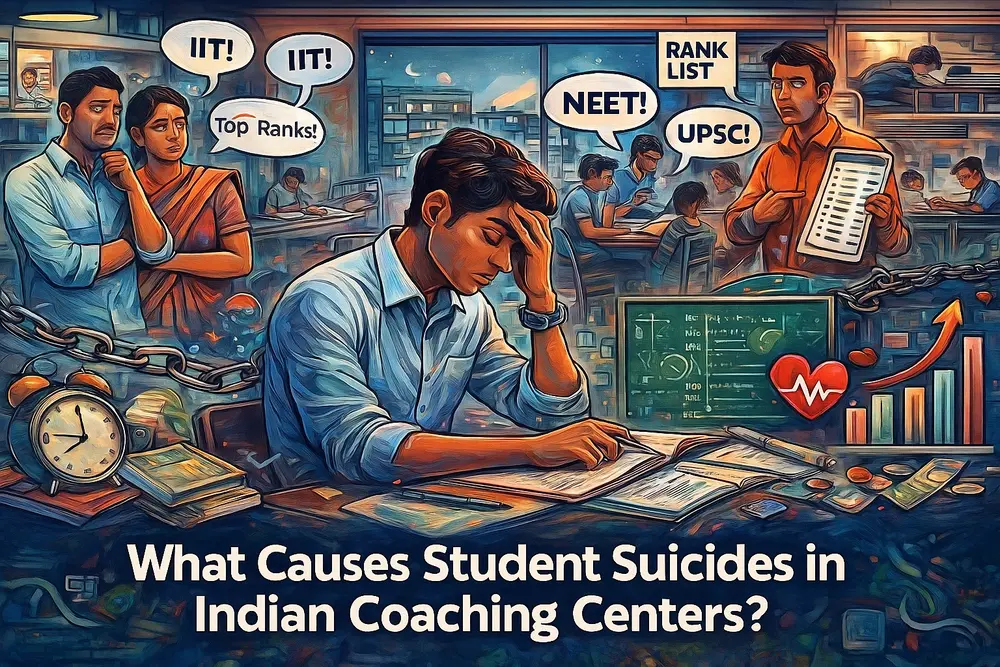
What Causes Student Suicides in Indian Coaching Centers?
India’s coaching-center hubs—Kota, Delhi, Patna, Hyderabad—have grown into massive academic ecosystems where thousands of students migrate every year, chasing dreams of IITs and medical colleges.
These cities run on a fast-paced, high-pressure culture built around ranks, tests, and long study hours. But behind the bright banners and success stories lies a darker reality: a steady rise in student suicides.
The pressure to perform, fear of failure, and emotional isolation are silently crushing many young learners who feel trapped in a race they cannot step out of.
This crisis isn’t just a headline; it’s a warning. Understanding what truly drives students to such extreme decisions is essential for everyone involved. Parents need clarity to avoid unknowingly adding pressure.
Policymakers must recognize the gaps in mental-health support and regulation. And students deserve an environment where dreams don’t cost their well-being.
Decoding the root causes is the first step toward building safer, healthier learning spaces.
The Pressure Cooker System of Coaching Centers
India’s coaching centers operate like high-pressure engines designed to produce top ranks, not balanced learners.
Students enter these hubs with big dreams but quickly find themselves trapped in an unforgiving system of competition, long study hours, and zero emotional space. This pressure-cooker environment quietly shapes their mental health and overall well-being.
Competition Beyond Healthy Limits
The race for IIT-JEE, NEET, UPSC, and elite colleges pushes students far beyond healthy academic competition.
Every test, rank, and mock exam becomes a measure of personal worth. Surrounded by thousands with the same goal, students feel they must outperform everyone to justify their sacrifices.
Unrealistic expectations—often from families, peers, and society—add another layer of stress. Instead of learning, students begin surviving, constantly fearing failure and feeling crushed under expectations they never had the space to define themselves.
Extreme Study Hours & Rigid Schedules
Many coaching centers normalize 12–16 hour study routines, leaving students with little room for rest, hobbies, or emotional breathing space.
Days blur into endless classes, assignments, and revision cycles. The rigid schedules barely allow time to process what they’re learning, let alone decompress or connect with others. This constant grind creates chronic fatigue and burnout, making students feel like machines instead of teenagers.
Over time, the lack of balance steals joy, motivation, and mental stability, deepening stress silently.
Coaching Centers as “Factories,” Not Schools
Most coaching centers function less like educational institutions and more like production factories.
Students are sorted into batches, ranked repeatedly, and often valued only by performance. This mass-processing approach leaves little room for personal guidance or emotional support. Teachers, burdened with huge class sizes, rarely understand individual struggles.
As students move through this system, they feel invisible—just another roll number in a long list. The absence of personalized care gradually erodes confidence and makes the environment emotionally draining.
Mental Health Crisis Among Students
Behind the disciplined routine of coaching centers lies a silent mental health crisis that many students struggle to articulate. Away from home, burdened by expectations, and trapped in constant performance pressure, they often face emotional battles alone. These psychological struggles quietly intensify, making it essential to understand the hidden pain behind academic ambition.
Anxiety, Depression & Burnout
Students frequently ignore early signs of anxiety, depression, and burnout, mistaking them for normal stress.
Sleepless nights, constant worry, loss of appetite, and emotional numbness often go unnoticed or unspoken. The stigma around seeking help makes it worse—many fear being judged as “weak” or “distracted.”
Without timely support, these feelings intensify, turning everyday academic challenges into overwhelming emotional burdens, slowly eroding confidence and the ability to cope in healthy ways.
Loneliness & Isolation
Thousands of students live away from their families, often for the first time, and the sudden emotional gap hits harder than expected.
With tight schedules and competitive environments, social interaction becomes limited and superficial.
The absence of familiar support systems leaves students feeling disconnected, unheard, and emotionally stranded.
This loneliness deepens during stressful periods, making them feel like they have no one to confide in, even when they desperately need comfort, reassurance, or simply someone who understands.
Fear of Failure
The belief that “one exam decides your entire future” creates a suffocating fear among students. Every test becomes a high-stakes moment, and even minor setbacks trigger guilt or shame.
Many internalize failure as a personal flaw rather than part of learning. This mindset makes them excessively self-critical, afraid to disappoint parents or waste financial sacrifices.
Over time, the fear becomes emotionally overwhelming, turning academic pressure into a constant mental struggle that chips away at self-worth.
Academic & Parental Pressure
Academic expectations in coaching hubs don’t operate alone—they’re tightly woven with parental pressure and societal norms. Many students enter these centers already carrying emotional weight from home.
Expectations, comparisons, and financial sacrifices create an environment where young minds feel obligated to succeed at any cost, often compromising their mental and emotional safety.
Parental Expectations
Parents often project their own unrealized dreams onto their children, hoping coaching centers will guarantee success.
While intentions may be loving, emotional unavailability or misunderstanding can make students feel unseen and unsupported. When children fear disappointing their parents, even small setbacks feel catastrophic.
Without open conversations or empathy, students internalize this pressure, believing their worth depends solely on achievement, creating a heavy emotional burden they silently carry every single day.
Comparison Culture
Comparison has become a constant companion for coaching students—fueled by relatives, peers, social media, and competitive classroom environments.
Rank lists, score updates, and success stories make students feel they must always measure up. This toxic cycle forces them to view their value through numbers rather than growth.
Even small fluctuations in performance trigger insecurity and shame, pushing students into a mindset where they constantly evaluate themselves against others instead of focusing on their own progress.
Financial Pressure
Coaching fees, hostel rent, books, tests, and travel expenses create significant financial strain on families.
Students are acutely aware of these sacrifices and feel obligated to “justify the investment.” This responsibility often turns into guilt, especially when they struggle academically.
Instead of learning freely, they feel trapped by the fear of wasting money or failing their parents’ efforts. Over time, this monetary pressure becomes another heavy layer on their emotional and mental well-being.
Systemic Neglect by Coaching Centers
While coaching centers promise discipline and success, many fail to provide the basic emotional and structural support students desperately need. Behind their polished reputations lies systemic neglect—poor mental-health care, toxic teaching practices, and unsafe living conditions. These ignored issues quietly intensify student distress, making the environment far more harmful than helpful.
Inadequate Mental Health Infrastructure
Most coaching centers lack qualified mental-health professionals, leaving students to cope with stress entirely on their own.
Regular emotional check-ups are rarely conducted, and mental well-being is often dismissed as a “personal issue.”
Without counselors or support systems, students have nowhere to turn when anxiety or depression begins to build.
This absence of structured help means early warning signs go unnoticed, allowing emotional struggles to grow until they become overwhelming and, at times, dangerous.
Toxic Teaching & Punishment Patterns
Many students face humiliation, harsh scolding, and rank-based discrimination in the classroom.
Teachers, pressured to produce high results, sometimes resort to fear-driven methods that damage confidence instead of building it.
Students who score lower are often singled out or demoted to weaker batches, deepening their shame.
With no safe grievance channels, they endure this silently. Such environments create emotional wounds that compound academic stress, turning coaching centers into hostile spaces rather than supportive learning hubs.
Poor Hostel Conditions
Hostels linked to coaching centers often fail to meet basic living standards. Students commonly share congested rooms, eat low-quality food, and live in poorly maintained, sometimes unsafe spaces.
The lack of supervision means emotional or health issues go unnoticed. Without supportive wardens or mentors, hostels feel isolating rather than comforting.
These uncomfortable conditions drain energy, disrupt routines, and worsen stress, making it even harder for students to stay focused or emotionally balanced during their demanding academic journey.
Societal Factors That Amplify the Crisis
Beyond coaching centers and family pressures, society itself shapes the stress students face. Deep-rooted beliefs about success, failure, and mental health create an environment where young people feel trapped in narrow expectations. These cultural forces silently intensify emotional strain, making it harder for students to cope or seek help when they need it most.
Limited Career Awareness
Society’s obsession with medicine and engineering as the only “respectable” careers restricts students’ choices from the start.
Many grow up believing success exists only within these two paths, leaving them unaware of the vast opportunities beyond them.
Without proper guidance or exposure, they feel compelled to follow these high-pressure routes even if they don’t align with their interests. This mismatch creates internal conflict and stress, pushing students into competitive environments they never truly chose.
Stigma Around Failure
Cultural conditioning often treats failure as a personal flaw rather than a natural part of learning.
Students grow up fearing judgment from relatives, neighbors, and peers if they fall short academically.
Even a slight dip in marks can feel like a social embarrassment. This shame-driven mentality forces students to hide their struggles and push themselves beyond healthy limits.
Over time, the fear of disappointing others becomes emotionally exhausting, intensifying pressure and reducing resilience.
Silence Around Mental Health
Mental health remains a taboo topic in many parts of Indian society. Students are often taught to stay strong, hide emotions, and avoid discussing anxiety or depression. This silence creates guilt and confusion when they start experiencing distress.
Afraid of being misunderstood or dismissed, they choose not to speak up—even when they desperately need support.
Without open conversations or acceptance, emotional struggles deepen quietly, making the journey through coaching centers even more isolating and overwhelming.
What Needs to Change?
To truly protect students, meaningful change must happen at every level. Coaching centers, parents, and policymakers all share responsibility. By improving support systems, reducing pressure, and prioritizing mental health, we can create an environment where students learn safely without sacrificing their emotional well-being.
For Coaching Centers
Coaching centers must prioritize mental well-being by hiring licensed counselors who can address emotional struggles early.
Smaller batch sizes allow teachers to understand individual needs better. Regular mental-health assessments should become standard, helping track student stress levels. Most importantly, humiliation-based teaching must stop.
Encouraging, respectful guidance fosters confidence, making coaching centers healthier spaces where students feel valued rather than judged.
For Parents
Parents must set realistic expectations that reflect their child’s abilities, not societal pressure. Open, supportive communication helps students share struggles without fear.
Encouraging breaks, hobbies, and balanced routines ensures children don’t lose themselves in endless study cycles.
When parents show unconditional support, students feel safe, understood, and emotionally stronger, reducing the overwhelming weight of academic pressure they often carry alone.
For Policymakers
Policymakers need to introduce strict regulations to ensure coaching centers operate responsibly.
Legal guidelines can standardize teaching practices, hostel conditions, and counselor availability. Mandatory mental-health helplines provide students immediate support during crises.
Student protection laws can hold institutions accountable for negligence. With strong policies in place, the education ecosystem becomes safer, preventing many avoidable tragedies.
How Students Can Protect Their Mental Health
Students navigating the coaching-center grind must learn to protect their mental health as seriously as they prepare for exams.
The first step is building healthy daily routines—balanced sleep, regular meals, and short breaks that allow the mind to reset.
A structured timetable helps maintain clarity, while hobbies like music, drawing, or sports provide emotional release and prevent burnout.
Time management isn’t just about squeezing in study hours; it’s about creating space for mental breathing and personal joy.
Equally important is learning to say, “I need help.” Reaching out to a friend, mentor, parent, or counselor is not weakness—it’s emotional strength.
Peer support systems can make a huge difference. Sharing struggles with classmates who understand the same pressure often brings comfort and reduces feelings of isolation.
Students should also stay aware of emergency helplines and mental-health resources available in their city or coaching center. Saving these numbers is a small step that can make a life-saving difference during overwhelming moments.
By combining self-care, communication, and awareness, students can create a protective emotional shield.
Success becomes healthier, more achievable, and far less isolating when mental well-being is treated as a priority—not an afterthought.
Conclusion
India’s coaching-center crisis is not driven by a single factor but by a combination of intense academic pressure, unrealistic expectations, emotional isolation, and systemic neglect.
Students face competition that overwhelms them, environments that ignore mental health, and societal beliefs that equate success with a single career path. These forces create a silent storm that many young minds struggle to survive.
It is crucial to remember: no exam, rank, or career goal is worth a life. Marks can be improved, careers can change, and opportunities will always come again—but a life lost cannot be brought back.
The responsibility to protect students does not fall on them alone. Coaching centers must prioritize mental health and humane teaching practices.
Parents must offer understanding, not pressure. Policymakers must enforce strong regulations and safety measures. And society must change the mindset that glorifies stress and punishes failure.
Only through collective responsibility can we build an educational ecosystem where students feel safe, supported, and valued—both as learners and as human beings.