The real impact of hybrid work on work-life balance in modern society is a mix of flexibility and new challenges.
While hybrid work improves time management, reduces commuting, and supports personal well-being, it also blurs boundaries between work and home life.
In 2026, achieving work-life balance depends on structured routines, clear boundaries, and mindful technology use.
Hybrid work benefits productivity and lifestyle—but only when individuals and organizations actively manage balance and prevent burnout.
Understand the benefits and challenges of hybrid work on work-life balance, including time management, remote work trends, and mental health in modern society.
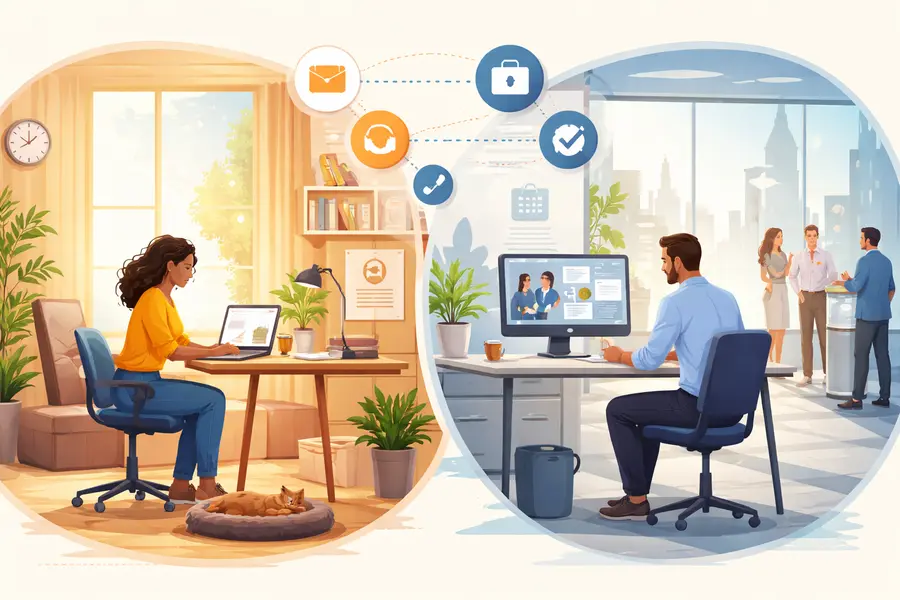
What Is the Real Impact of Hybrid Work on Work-Life Balance in Modern Society in 2026?
Hybrid work has evolved from a temporary solution into a defining feature of modern professional life in 2026.
Hybrid work blends remote and in-office work and promises flexibility, autonomy, and better work-life balance. But the reality is more complex than the ideal.
For some, hybrid work has unlocked freedom—less commuting, more family time, and personalized productivity. For others, it has blurred boundaries, increased expectations, and made it harder to truly “switch off.”
As organizations refine policies and employees adapt their routines, hybrid work continues to reshape how we define balance between professional and personal life.
The real impact lies not just in where we work, but in how we manage time, energy, and expectations.
Let’s explore the deeper effects of hybrid work on daily life, relationships, productivity and mental well-being, offering a grounded understanding of what balance really looks like today.
The Promise of Flexibility vs. the Reality of Structure
Hybrid work is often marketed as the ultimate flexible lifestyle, but flexibility without structure can quickly turn chaotic.
While employees can choose when and where they work, many struggle to create consistent routines.
Without clear boundaries, work hours can stretch into personal time, making it harder to disconnect.
On the other hand, structured hybrid models—such as fixed in-office days—help maintain rhythm and discipline. The key difference lies in how organizations design hybrid systems and how individuals use that freedom.
True work-life balance doesn’t come from unlimited flexibility; it comes from intentional structure within that flexibility.
Employees who actively plan their schedules tend to experience less stress and greater satisfaction compared to those who let work spill into every corner of their day.
The Death of Commuting—and What Replaced It
One of the biggest advantages of hybrid work is reduced commuting. Hours once spent in traffic are now available for sleep, exercise, or family time. However, this reclaimed time is not always used for personal well-being.
Many professionals unintentionally fill it with more work, extending their workday. In some cases, the mental transition that commuting provided—a buffer between work and home—has disappeared.
Without that separation, people may feel like they are always “on.” Hybrid work offers the opportunity to reclaim time, but it also demands conscious decisions about how to use it.
Those who replace commuting with meaningful routines—like morning walks or personal rituals—tend to maintain a healthier balance than those who simply log in earlier and log off later.
Blurred Boundaries Between Work and Personal Life
Hybrid work has significantly blurred the line between professional and personal spaces. When your home becomes your office, it becomes difficult to mentally separate the two roles.
Notifications, emails, and virtual meetings can intrude into evenings and weekends. This constant connectivity creates a subtle pressure to always be available. Over time, this can lead to burnout and reduced satisfaction in both work and personal life.
Establishing clear boundaries—such as dedicated workspaces, fixed working hours, and digital detox periods—is crucial.
Employers also play a role by respecting off-hours and discouraging after-work communication.
Without conscious effort from both sides, hybrid work can turn into an “always working” culture rather than a balanced one.
Increased Autonomy and Its Psychological Effects
Hybrid work gives employees more control over how they manage their tasks, which can boost motivation and job satisfaction.
Autonomy allows individuals to work during their most productive hours and create environments that suit their needs. However, increased autonomy also comes with increased responsibility.
Without direct supervision, some employees feel pressure to prove their productivity, leading to overworking.
Others may struggle with self-discipline and procrastination. The psychological impact varies depending on personality and work style.
People who thrive on independence often excel, while those who rely on structure may feel overwhelmed.
Achieving balance requires self-awareness—understanding personal work habits and setting realistic expectations. Autonomy is powerful, but only when paired with accountability and healthy limits.
Social Isolation vs. Meaningful Connections
Hybrid work reduces daily in-person interactions, which can lead to feelings of isolation. Casual conversations, spontaneous brainstorming, and workplace friendships are harder to replicate virtually.
While digital communication tools help, they often lack the emotional depth of face-to-face interaction.
On the flip side, hybrid work allows individuals to invest more time in personal relationships outside of work.
The impact depends on how people balance these social dimensions. Organizations can support connection by organizing purposeful in-office days and encouraging team engagement.
Employees can also take initiative by maintaining regular check-ins with colleagues.
Hybrid work doesn’t eliminate social interaction—it changes how it happens. Those who actively nurture both professional and personal relationships tend to experience a more fulfilling work-life balance.
Productivity Gains and Hidden Burnout
Many studies suggest that hybrid work improves productivity, as employees face fewer office distractions and can focus better at home. However, this increased productivity often comes at a cost.
Without clear stopping points, employees may push themselves harder and work longer hours. This leads to what experts call “hidden burnout”—where individuals appear productive but feel mentally exhausted.
The absence of visible fatigue in remote settings makes it harder for managers to recognize burnout early.
Sustainable productivity requires balance, not constant output. Regular breaks, realistic workloads, and open communication about stress levels are essential.
Hybrid work can enhance efficiency, but only when productivity is measured by outcomes rather than hours worked.
The Role of Employers in Shaping Balance
Work-life balance in a hybrid model is not solely an individual responsibility—employers play a critical role.
Companies that set clear expectations, respect boundaries, and promote well-being create healthier work environments.
Policies such as “no meeting” hours, flexible scheduling, and mental health support can make a significant difference.
On the other hand, unclear guidelines and constant availability expectations can quickly erode balance.
Leadership behavior also matters; when managers model healthy habits, employees are more likely to follow.
Hybrid work success depends on trust, communication, and thoughtful policy design.
Organizations that prioritize employee well-being are more likely to retain talent and maintain long-term productivity in this evolving work landscape.
Technology: Enabler and Intruder
Technology is the backbone of hybrid work, enabling seamless communication and collaboration across locations.
Tools like video conferencing, messaging apps, and project management platforms make remote work possible. However, the same technology can become intrusive.
Constant notifications and digital overload can create stress and reduce focus. The expectation to respond instantly adds to the pressure.
Managing technology use is essential for maintaining balance. Simple practices like turning off notifications after work hours, scheduling focus time, and limiting unnecessary meetings can help.
Technology should serve productivity, not control it. When used mindfully, it enhances hybrid work; when overused, it becomes a source of burnout.
Read Here: Role of Technology in Transforming the Workplace
Work-Life Balance Looks Different for Everyone
One of the most important truths about hybrid work is that there is no one-size-fits-all solution. What feels balanced for one person may feel overwhelming for another.
Parents, young professionals, and caregivers all have different needs and priorities.
Hybrid work allows for personalization, but it also requires individuals to define their own version of balance. This involves setting priorities, communicating needs, and making intentional choices about time and energy.
Comparing oneself to others can lead to unnecessary stress. Instead, success lies in creating a routine that aligns with personal values and lifestyle.
Hybrid work offers the flexibility to design that balance—but it must be actively shaped, not passively expected.
Read Here: Why Effective Time Management is Important
The Future of Work-Life Balance in Hybrid Models
As hybrid work continues to evolve, its impact on work-life balance will depend on how both employees and organizations adapt.
The future will likely involve more refined policies, better technology, and a deeper understanding of well-being.
Companies may shift toward outcome-based performance rather than time-based metrics, allowing employees greater freedom without compromising accountability. At the same time, individuals will need to develop stronger self-management skills.
Work-life balance in 2026 is no longer about strict separation—it’s about integration with boundaries.
The most successful hybrid models will be those that respect human needs while embracing flexibility.
Ultimately, hybrid work is not a perfect solution, but it is an opportunity to redefine balance in a more personalized and sustainable way.