Humanoid robots like Tesla Optimus are testing sodium-ion power to achieve sustainable, long-term autonomy. While lithium-ion batteries dominate consumer tech, they face severe supply chain constraints, thermal runaway risks, and rapid degradation under intense robotic workloads. Sodium-ion batteries leverage earth-abundant, low-cost salt chemistry, providing superior thermal safety, extreme cold-weather resilience, and exceptional cycle life. This makes sodium-ion an ideal choice for scaling affordable, durable humanoid robot fleets across heavy industrial environments.
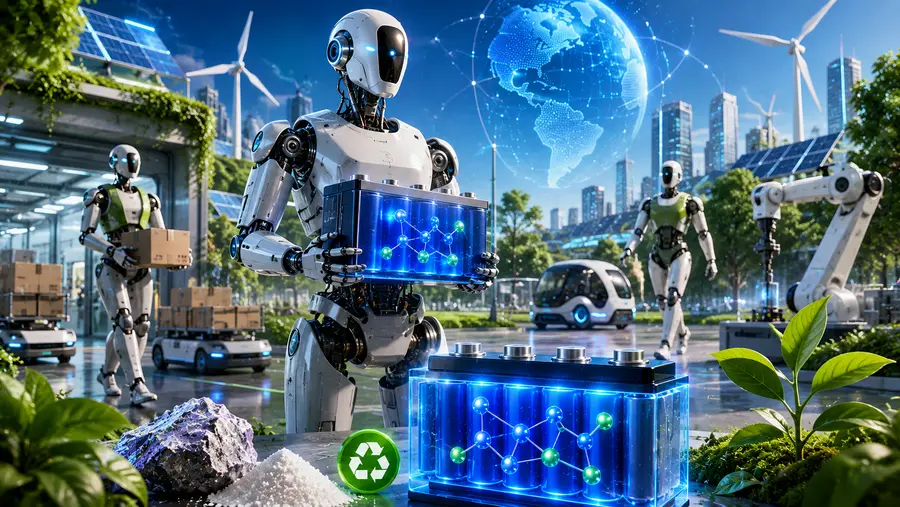
Eliminating Lithium Limits: Why Humanoid Robots Are Testing Sodium-Ion Power
Humanoid robotics has officially transitioned from the pages of science fiction into the corridors of modern fulfillment centers, manufacturing floors, and research laboratories.
As companies race to deploy bipedal and untethered machines capable of navigating human environments, an unexpected hurdle has emerged. It is not the artificial intelligence, the computer vision, or the complex kinematic control loops that are throttling the immediate scaling of these systems.
It is the battery.
To date, high-performance robotics has relied almost entirely on lithium-ion (Li-ion) chemistry—the same power source that runs our smartphones and electric vehicles. However, as fleets of bipedal machines prepare for 24/7 industrial shift work, the ecological, financial, and thermal realities of lithium-ion systems are forcing a critical reassessment.
Enter sodium-ion (Na-ion) battery technology. Once discarded as too heavy and energetically sparse, sodium-ion power is undergoing a massive industrial renaissance. It is rapidly positioning itself as the key to achieving true, sustainable autonomy in the next generation of humanoid robots.
Why Humanoids Need “More” (The Energy Demand Side)
When we evaluate the energy requirements of a humanoid robot, it is easy to misjudge the sheer volume of power these systems draw. Unlike a wheeled automated guided vehicle (AGV) that glides effortlessly across flat concrete, a humanoid robot must constantly fight gravity. Every step requires a sequence of continuous micro-adjustments across dozens of degrees of freedom.
Power Density vs. Cycle Life
Humanoid robot actuation requires a highly volatile power delivery profile. When a robot is lifting a heavy payload, recovering its balance after an unexpected bump, or climbing a flight of industrial stairs, its joint actuators require immense bursts of transient power. These high-current draws put massive strain on the internal chemistry of a traditional battery, causing localized heating and accelerated chemical degradation.
Conversely, when the robot is standing stationary or performing light manipulation tasks, the draw stabilizes, but the heavy onboard computational stack—comprising high-wattage GPUs and edge-computing processors processing real-time spatial AI—maintains a high baseline power consumption.
This dual-nature power profile creates a brutal operational reality for lithium-ion systems:
- Accelerated Wear: Constantly cycling between baseline computational draws and high-amp mechanical spikes radically shortens standard lithium battery lifespans.
- The Cycle Life Problem: If an industrial humanoid requires a complete battery replacement every 800 to 1,000 cycles, the total cost of ownership (TCO) skyrockets, rendering fleet deployments economically unviable for logistics providers.
The Weight Penalty and the Square-Cube Law
In robotics design, weight is the ultimate adversary. When you add more battery capacity to give a robot a longer runtime, you inadvertently increase the robot’s total mass. This extra mass requires more torque from the electric motors to move the limbs, which in turn consumes more electricity.
This creates a diminishing return loop often referred to in structural engineering as a variation of the square-cube law: doubling the battery size does not double the operational runtime because the robot now spends a significant portion of its new energy simply moving its own increased bulk. Humanoid engineering requires a delicate equilibrium where every gram of weight must justify its presence.
The Sustainability Mandate
Beyond pure mechanics, there is an ethical and regulatory push reshaping the robotics sector. Companies deploying autonomous workforces are doing so to build more resilient, efficient supply chains. However, if those autonomous workforces are powered by materials sourced through environmentally damaging processes, the net-sustainability goals of the enterprise are completely invalidated.
The mining and refining of lithium, cobalt, and nickel carry substantial environmental footprints, water-scarcity impacts, and geopolitical supply chain vulnerabilities. As corporate sustainability reporting becomes more tightly regulated worldwide, manufacturers must account for the embodied carbon and raw material ethics of their entire automated fleet.
The Sodium-Ion Advantage: A Technical Breakdown
To understand why sodium-ion technology is moving from laboratory benches into active humanoid chassis, we must examine the core electrochemistry. On a fundamental level, sodium-ion batteries function almost identically to their lithium-ion counterparts. Both operate via the “rocking-chair” principle, where ions migrate between an anode and a cathode through an electrolyte layer during charge and discharge cycles.
As seen in the technical diagram above, sodium ions ($Na^+$) shift back and forth across a porous separator. While the mechanical process feels familiar, swapping lithium for sodium introduces several radical changes in material behavior and industrial cost structure.
Material Abundance and Cost Insulation
Sodium is the sixth most abundant element in the Earth’s crust, found in limitless supply via common rock salt ($\text{NaCl}$). It is roughly 1,000 times more abundant than lithium. This geographical neutrality means that sodium-ion production lines can be established virtually anywhere, completely insulated from the volatile geopolitical choke points that dominate the lithium, cobalt, and nickel supply chains.
Furthermore, sodium chemistry does not alloy with aluminum. This allows engineers to use cheap, lightweight aluminum foil for the current collectors on both the anode and the cathode. Lithium batteries, by contrast, must use more expensive copper foil on the anode side to prevent chemical reactions that would destroy the cell. The elimination of copper and rare earth metals drives the manufacturing costs of sodium-ion cells significantly below that of premium lithium chemistries.
Inherent Thermal and Safety Profiles
Safety is a primary concern when deploying a 150-pound metal machine to work alongside human employees. Lithium-ion batteries are notoriously sensitive to physical punctures, overcharging, and internal short-circuits, all of which can trigger a phenomenon known as thermal runaway—an unstoppable, self-sustaining fire that releases toxic gases.
Safety Insight: Sodium-ion batteries possess an incredibly stable chemical structure. They are highly resistant to thermal runaway, do not catch fire when punctured, and can be completely discharged to zero volts ($0\text{ V}$) for safe shipping and long-term storage without damaging the cell’s internal matrix.
For a humanoid robot operating in a crowded warehouse or a domestic environment, this safety margin is game-changing. A mechanical failure or an accidental structural impact that breaches the battery housing will not result in a catastrophic fire event.
Ambient and Cold-Weather Resiliency
Traditional lithium batteries experience sharp drops in efficiency, capacity, and discharge rates when temperatures dip below freezing. This occurs because the internal liquid electrolyte becomes highly viscous, impeding the movement of lithium ions.
Sodium-ion batteries maintain excellent ion mobility even at extreme sub-zero temperatures. Many modern sodium-ion formulations can deliver up to 80% to 85% of their rated capacity at $-20^{\circ}\text{C}$. This cold-weather operational window makes them uniquely suited for automated logistics in unheated environments, cold-storage facilities, or outdoor security and maintenance applications where lithium-powered systems would face rapid failure or require energy-intensive internal heating systems.
Evaluating Battery Chemistries for Humanoid Deployment
To understand exactly where sodium-ion sits in the current technological landscape, it is helpful to contrast its core specifications directly against traditional Lithium-Ion ($\text{NMC}$ and $\text{LFP}$) and speculative Solid-State architectures.
| Battery Metric | Lithium-Ion (NMC) | Lithium Iron Phosphate (LFP) | Sodium-Ion (Na-ion) | Solid-State (Future) |
| Energy Density ($\text{Wh/kg}$) | High ($200\text{–}300$) | Moderate ($140\text{–}180$) | Low to Moderate ($100\text{–}160$) | Very High ($350\text{–}500$) |
| Cycle Life (to 80% Capacity) | Moderate ($1,000\text{–}2,000$) | High ($3,000\text{–}4,000$) | Very High ($4,000\text{–}6,000+$) | Unknown (Predicted High) |
| Raw Material Scarcity | Severe (Lithium, Cobalt, Nickel) | Moderate (Lithium) | Extremely Low (Sodium/Salt) | High (Lithium/Rare Earths) |
| Thermal Runaway Risk | High | Low | Extremely Low | Minimal |
| Relative Production Cost | High ($100\%$) | Baseline ($70\%$) | Low ($40\text{–}50\%$) | Extremely High ($200\%+$) |
As illustrated by the data and the accompanying graph, sodium-ion does lag behind standard lithium-ion options in absolute energy density. However, for industrial humanoid systems, the trade-off is often deeply logical. The massive leap forward in cycle life and safety more than offsets the requirement for a slightly larger physical footprint.
The Impact on “Sustainable Autonomy”
True autonomy is not merely a software achievement; it is a lifecycle equation. If a robot requires carbon-intensive manufacturing, a fragile supply chain, and short-lived components, its autonomy is an illusion sustained by an unsustainable industrial backbone.
[ THE SUSTAINABLE ROBOTICS LIFECYCLE ]
Raw Materials: Earth-Abundant Salt (NaCl)
│
▼
Manufacturing: Low embodied carbon, zero copper/cobalt
│
▼
Operation: 4,000+ stable cycles, safe thermal footprint
│
▼
End-of-Life: Simplified, non-toxic recycling pathways
Lifecycle Analysis (LCA) Transformations
Swapping the power source of a humanoid robot to a sodium-ion chemistry radically reduces its embodied carbon footprint from day one. Because sodium-ion cells do not require the intensive chemical isolation or the highly destructive mining techniques associated with cobalt or lithium brines, the initial carbon accounting of creating the robot drops by up to 40%. This allows robotics manufacturers to sell units that help end-users meet strict Scope 3 emissions targets—emissions that occur across an organization’s broader value chain.
Revolutionizing End-of-Life and Recyclability
When a lithium-ion battery reaches the end of its useful life, recycling it is a highly technical, potentially hazardous process. Deconstructing the cells requires specialized facilities equipped to handle volatile chemical compounds and prevent toxic runoff. Because of these barriers, a staggering percentage of lithium batteries globally still end up in specialized long-term storage or, worse, landfills.
Sodium-ion batteries present a far more elegant end-of-life loop. The absence of toxic heavy metals like cobalt and nickel, combined with the use of aluminum current collectors on both sides of the cell, means the materials can be processed using standard, existing hydrometallurgical recycling frameworks. The process is safer, cheaper, and yields recycled materials that can be directly re-introduced into industrial manufacturing pipelines without extensive purification.
Current Challenges to Sodium-Ion Adoption
While the advantages of sodium-ion power are undeniable, it would be disingenuous to present the technology as a flawless, catch-all solution. There are real engineering challenges that robotics companies are actively working to mitigate.
Managing the Volumetric Footprint
The primary drawback of sodium-ion chemistry is its physical size. Because a sodium atom is fundamentally larger and heavier than a lithium atom, it occupies more spatial volume within the battery’s molecular structure. This results in a lower energy density per kilogram.
For a sleek, human-sized robot, space inside the structural chassis is premium real estate. To get the same amount of watt-hours out of a sodium-ion pack as you would a premium lithium-ion pack, the battery module must be roughly 20% to 30% larger. Robotics engineers must get creative with mass distribution—often routing battery segments down the thighs, lower legs, or wrapping them around the central torso structure to prevent the robot from becoming top-heavy or excessively bulky.
The Standardization Gap
The humanoid robotics sector is currently in its “Wild West” era. Every major startup and established engineering firm is building proprietary chassis designs, custom actuators, and bespoke voltage architectures.
Because sodium-ion manufacturing is still scaling up globally compared to the hyper-mature lithium sector, there is a pronounced lack of off-the-shelf, standard sodium-ion cell formats designed specifically for high-power robotics applications. Most early adopters must design custom, low-volume battery management systems (BMS) and specialized enclosures, which adds an initial engineering cost barrier.
The Future of Circular Industrial Robotics
As we look toward the end of this decade, the convergence of sustainable battery chemistries and autonomous workforces points toward a highly efficient, circular industrial model.
Decentralized Charging Paradigms
Because sodium-ion cells can accept rapid charge rates without inducing severe micro-cracking in the anode structure, the charging infrastructure for humanoid fleets can change. Instead of requiring robots to park for hours at dedicated, highly climate-controlled charging bays, robots can utilize short, aggressive “opportunity charging” cycles during natural operational pauses.
Furthermore, because these battery packs are fundamentally safe and inexpensive, logistics hubs can integrate them directly with local, on-site renewable energy sources like rooftop solar arrays. A warehouse can use its own solar energy to charge its robotic workforce, achieving an incredibly pure form of operational sustainability.
Closing the Material Loop
The ultimate objective of sustainable autonomy is a completely closed-loop system. Imagine an autonomous machine made from highly recyclable aluminum and composite structures, controlled by energy-efficient edge processors, and powered by an earth-abundant sodium matrix derived from common salt. When that machine finally reaches its mechanical end-of-life after years of continuous service, nearly 95% of its structural and chemical components can be melted down, reprocessed, and reconstituted into the next generation of automated workers.
This is not a utopian fantasy; it is a pragmatic engineering roadmap driven by economic scarcity, regulatory pressure, and the undeniable physics of resource distribution on a finite planet.
What Makes Sodium-Ion Batteries the Future of Humanoid Robotics?
Sodium-ion batteries are seen as the future of humanoid robotics because they are safer, cheaper, and more sustainable than lithium-ion, while still delivering the high power and reliability robots need for balance, movement, and human interaction. Their ability to handle peak energy demands and avoid costly raw materials makes them ideal for next-generation humanoids.
Sodium-ion batteries are also safer, with lower risk of overheating or fire, which is important when robots work near people. Another big advantage is their ability to deliver quick bursts of energy. Robots use a lot of power just to stand and balance, and even more when they walk or lift.
Sodium-ion batteries can handle these demands while keeping energy steady. Their design also allows better weight distribution, which helps robots stay stable and safe if they fall.
Sodium-ion batteries combine safety, cost savings, and performance, making them a strong choice for powering the future of humanoid robotics.
Conclusion: A Paradigm Shift in Robotic Energy
The integration of sodium-ion power into humanoid robotics represents a fundamental shift in how the tech industry views autonomous machines.
For years, the metric of success was absolute performance—building robots that could jump, run, and lift maximum weights regardless of the cost or resource footprint.
Now that humanoids are entering the commercial workforce, the metric of success has shifted to economic viability and systemic sustainability.
Sodium-ion technology provides the long-sought bridge. By trading a small amount of energy density for massive gains in cost insulation, safety, thermal stability, and environmental harmony, sodium power is quietly transforming the dream of autonomous robotic workforces into an enduring, sustainable reality.
Read Here: How CATL Sodium-Ion Batteries Cut Cold-Chain Supply Costs
FAQs
Why are humanoid robots testing sodium-ion batteries instead of lithium-ion?
Humanoid robots are testing sodium-ion batteries primarily for their enhanced safety, cost-effectiveness, and sustainability. While lithium-ion batteries offer higher energy density, sodium-ion technology significantly reduces the risk of thermal runaway and relies on highly abundant raw materials.
How does the safety of sodium-ion power compare to lithium-ion for robots?
Sodium-ion batteries are inherently safer because they have excellent thermal stability and a much lower risk of ignition or explosion. They can be fully discharged to zero volts safely, eliminating uncontrolled thermal events caused by internal short circuits.
Are sodium-ion batteries cheaper for manufacturing humanoid robots?
Yes, integrating sodium into power systems drastically reduces energy storage costs and mitigates raw material scarcity. Because sodium is a widely available element, it eliminates the expensive supply chain dependencies associated with lithium and cobalt mining.
How do sodium-ion batteries perform in extreme temperatures?
Sodium-ion batteries consistently outperform lithium-ion systems across a much wider operating temperature range. This enhanced thermal resilience allows humanoid robots to operate reliably in harsh, extreme environments without requiring complex, heavy active cooling systems.
Do sodium-ion batteries provide the same energy density as lithium-ion?
No, sodium-ion batteries currently have lower energy density than lithium-ion equivalents. This means they require more physical space and materials to build, making it an engineering challenge to fit them into sleek humanoid robot designs.
Why does the larger atomic size of sodium matter for robot batteries?
Sodium ions have a larger ionic radius compared to lithium ions. This fundamental physical difference leads to slower electrochemical kinetics within the electrodes, which can affect how quickly the robot’s battery can deliver bursts of power.
Are sodium-ion batteries better for the environment?
Absolutely. Sodium-ion power systems are highly sustainable because sodium is globally abundant and much less toxic than lithium salts. Choosing sodium helps manufacturers lower the severe environmental impacts typically caused by traditional lithium and cobalt extraction.
What materials are being used to improve sodium-ion batteries for robots?
Researchers are developing advanced electrode materials, such as hard carbons, layered oxides, and metallic alloys, to improve overall capacity. These innovations actively enhance conductivity, battery cycle stability, and charging performance for demanding robotics applications.
Can sodium-ion batteries handle the power requirements of moving humanoid robots?
While continuous progress in cell engineering is narrowing the performance gap, researchers are specifically optimizing cathode and anode interfaces. Current testing aims to ensure sodium batteries can reliably discharge enough current to support dynamic robotic locomotion.
Will sodium-ion batteries completely replace lithium-ion in humanoid robotics?
It is unlikely to happen immediately. While sodium-ion technology is not yet a complete replacement due to its lower energy density, it presents a highly viable, cost-effective option for robots where maximum range is less critical than safety.
References
Chawla, N., & Safa, M. (2019). Sodium batteries: A review on sodium-sulfur and sodium-air batteries. Electronics, 8(10), 1201. https://doi.org/10.3390/electronics8101201
de la Iglesia, D. H., Corbacho, C. C., Dib, J. Z., Alonso-Secades, V., & López Rivero, A. J. (2025). Advanced machine learning and deep learning approaches for estimating the remaining life of EV batteries—A review. Batteries, 11(1), 17. https://doi.org/10.3390/batteries11010017
Deng, J., Chen, J., & Mo, J. (2026). Powering humanoid robots: The central role of battery technology. The Innovation. https://doi.org/10.59717/ipj.energy-use.2026.100032
Kim, H. (2023). Sodium-ion battery: Can it compete with Li-ion? ACS Materials Au, 3(6), 571–575. https://doi.org/10.1021/acsmaterialsau.3c00049
Li, P., Hu, N., Wang, J., Wang, S., & Deng, W. (2022). Recent progress and perspective: Na ion batteries used at low temperatures. Nanomaterials, 12(19), 3529. https://doi.org/10.3390/nano12193529
Iwan, A., Bogdanowicz, K. A., Pich, R., Gonciarz, A., Miedziak, J., Plebankiewicz, I., & Przybyl, W. (2025). The Safety Engineering of Sodium-Ion Batteries Used as an Energy Storage System for the Military. Energies, 18, 978. https://doi.org/10.3390/en18040978
Read Here: Sodium-Ion vs Lithium-Ion: Which is Best for Autonomous Logistics?