World’s Greatest Scientists Who Believe in God: Newton, Kepler, Salam and More
Can someone believe in God and still be a great scientist? Does studying the universe, discovering the laws of nature, or understanding human biology make a person less religious?
These questions have been debated for centuries. While some people believe that science and religion are incompatible, the lives of several famous scientists demonstrate that scientific research and belief in God can coexist.
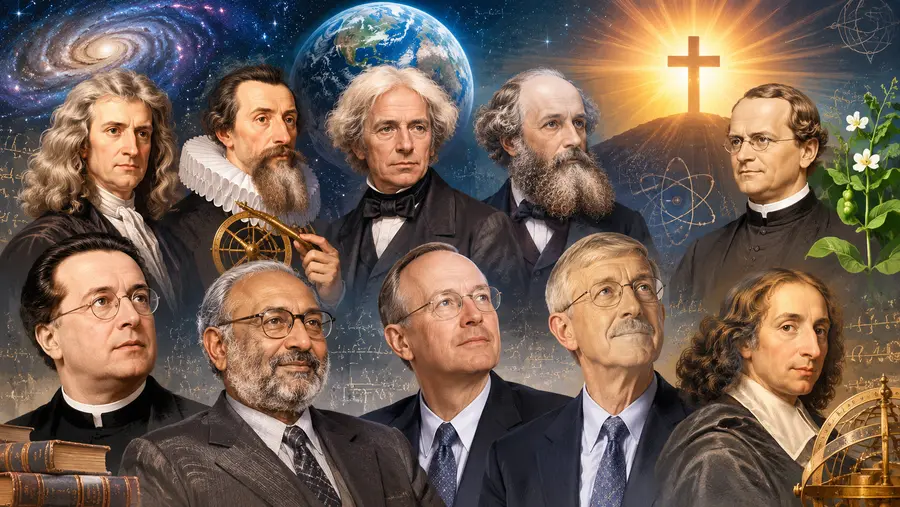
Throughout history, some of the world’s most influential scientists have held strong religious convictions. Isaac Newton believed in a Creator, Johannes Kepler viewed astronomy as a way to understand God’s creation, Michael Faraday and James Clerk Maxwell were committed Christians, and Nobel Prize-winning physicist Abdus Salam was a devout Muslim.
More recently, geneticist Francis Collins, who led the Human Genome Project and served as Director of the US National Institutes of Health, has also openly discussed his Christian faith.
These examples raise an interesting question: Why did these scientists believe in God, and how did they understand the relationship between scientific discovery and religious faith?
In this article, we will explore 10 famous scientists who believed in God, their major scientific achievements, their religious backgrounds, and what their experiences reveal about the relationship between science and faith.
Can Scientists Believe in God?
Yes. A person can be a dedicated scientist and believe in God at the same time.
Science is a systematic method of investigating the natural world through observation, experimentation, mathematical reasoning, and evidence. Religious belief, on the other hand, involves questions about God, spiritual reality, morality, purpose, and the meaning of existence.
Some scientists believe that understanding the laws of nature strengthens their appreciation of a Creator. Others see their scientific work and religious faith as two different ways of approaching questions about reality.
However, not all scientists are religious. Many are atheists, agnostics, or nonreligious, and scientists disagree about whether faith and science are compatible.
It is also important to understand that a scientist’s religious belief does not prove that God exists. Scientific discoveries must be evaluated through evidence and scientific methods, regardless of the researcher’s personal beliefs.
The examples below demonstrate something more limited but important: religious belief does not automatically prevent someone from making major scientific contributions.
Read Here: Why Is It So Hard for Some Scientists to Believe in God?
10 Famous Scientists Who Believed in God
1. Isaac Newton: The Physicist Who Saw the Universe as God’s Creation
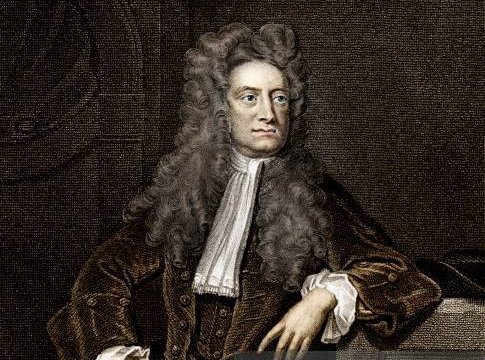
Scientific field: Physics, mathematics and astronomy
Religious belief: Unorthodox Christianity
Major achievements: Laws of motion, universal gravitation, calculus contributions and optics
Isaac Newton (1643–1727) is widely regarded as one of the most influential scientists in history.
His work transformed mathematics and physics. His famous book Philosophiæ Naturalis Principia Mathematica, published in 1687, established the mathematical framework of classical mechanics and presented his laws of motion and universal gravitation.
Newton also made major contributions to optics and the development of calculus.
What many people do not realize is that Newton devoted a substantial part of his life to religious and theological studies.
He studied the Bible, investigated early Christian history, wrote extensively about prophecy, and explored questions concerning the nature of God.
Newton believed in a supreme Creator responsible for the order of the universe. However, his religious views were not entirely consistent with the official Christian doctrines of his time.
In particular, Newton rejected the doctrine of the Trinity, believing that Jesus was divine but not God himself. This made his theology unorthodox and potentially controversial in seventeenth-century England.
Newton’s religious manuscripts reveal that theology was not simply a minor personal interest. It was a major part of his intellectual life.
According to the University of Oxford’s Newton Project, Newton’s religious writings cover subjects including Scripture, Christian history, prophecy, and the nature of God.
What can we learn from Newton?
Newton believed that studying the natural world could reveal something about its Creator. His scientific work and theological research existed alongside each other, even though they followed different approaches.
Read more: University of Cambridge — Reinterpreting Newton and Religion | Oxford Newton Project — Newton’s Religious Life and Work.
2. Johannes Kepler: The Astronomer Who Saw God in the Harmony of the Universe
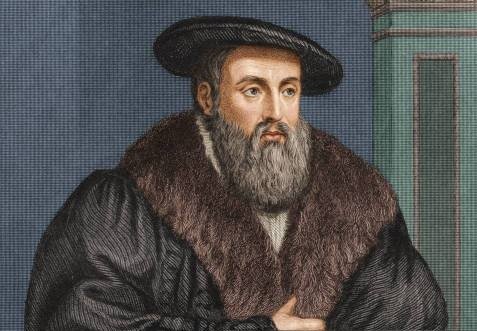
Scientific field: Astronomy, mathematics and physics
Religious belief: Christian, within the Lutheran tradition
Major achievements: Three laws of planetary motion
Johannes Kepler (1571–1630) was a German astronomer and mathematician whose discoveries transformed our understanding of the solar system.
He established three important laws of planetary motion:
- Planets move around the Sun in elliptical orbits.
- A line connecting a planet to the Sun sweeps out equal areas in equal times.
- The square of a planet’s orbital period is proportional to the cube of the semi-major axis of its orbit.
These laws helped establish the mathematical foundation of modern celestial mechanics.
Kepler was also a deeply religious thinker. He believed that the mathematical structure and harmony of the universe reflected the work of God.
For him, astronomy was more than measuring planetary movements. It was an opportunity to understand the order of creation.
His religious and philosophical convictions influenced how he approached questions about the structure of the cosmos.
The Stanford Encyclopedia of Philosophy explains that Kepler saw God as the Creator who established the mathematical structure of the universe. He believed that studying the cosmos could reveal aspects of divine design.
However, Kepler did not rely only on religious ideas. His astronomical theories were developed through mathematical calculations, observations, and the careful analysis of planetary data.
What can we learn from Kepler?
Kepler’s life demonstrates that a scientist can be motivated by religious curiosity while still relying on mathematical reasoning and observational evidence to investigate nature.
Read more: Stanford Encyclopedia of Philosophy — Johannes Kepler.
3. Michael Faraday: The Christian Scientist Who Helped Create the Electrical Age
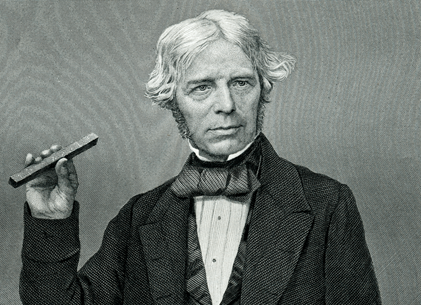
Scientific field: Physics and chemistry
Religious belief: Christian, belonging to the Sandemanian tradition
Major achievements: Electromagnetic induction, electric motors and foundational work in electromagnetism
Michael Faraday (1791–1867) was one of the most important experimental scientists of the nineteenth century.
His discoveries helped establish the foundations of modern electrical technology.
One of his most important achievements was the discovery of electromagnetic induction in 1831. This principle explains how a changing magnetic field can produce an electric current.
Electromagnetic induction is fundamental to the operation of many modern technologies, including electric generators and transformers.
Faraday also contributed to the development of electric motors, electrochemistry, and the scientific understanding of magnetic fields.
Apart from his scientific work, Faraday was a committed member of the Sandemanian Christian community, a small religious group with roots in the Glasite movement.
His religious identity was not merely a family background. It was an important part of his personal and community life.
Faraday maintained a strong commitment to his Christian community while pursuing an extraordinary scientific career.
What can we learn from Faraday?
Faraday’s life challenges the assumption that serious scientific investigation and religious commitment must necessarily contradict each other.
His achievements came from careful experiments, practical investigation, and intellectual curiosity. His religious identity was a separate but meaningful part of his life.
Read more: Royal Institution — Michael Faraday | Oxford Dictionary of National Biography — Michael Faraday.
4. James Clerk Maxwell: The Physicist Who Unified Electricity, Magnetism and Light
Scientific field: Physics and mathematics
Religious belief: Christian
Major achievements: Maxwell’s equations and electromagnetic theory
James Clerk Maxwell (1831–1879) is considered one of the greatest theoretical physicists in history.
His work transformed our understanding of electricity, magnetism, and light.
Maxwell developed a mathematical theory showing that electricity and magnetism are interconnected aspects of electromagnetism. His equations also demonstrated that electromagnetic waves travel at the speed of light.
This discovery helped establish that light itself is an electromagnetic wave.
His work became a foundation for many modern technologies, including:
- Radio communication.
- Television and broadcasting.
- Wireless networks.
- Radar systems.
- Electrical engineering.
- Modern telecommunications.
Maxwell was also a committed Christian.
He grew up in a Christian environment and maintained religious beliefs throughout his life. His correspondence with his wife, Katherine, contains discussions of Christianity, worship, and their shared religious life.
A historical study by Mark McCartney of Ulster University, published through the James Clerk Maxwell Foundation, documents the depth of Maxwell’s Christian faith.
The study explains how his faith influenced his personal life, social commitments, education, and sense of responsibility.
Maxwell’s religious beliefs did not prevent him from developing mathematical explanations of natural phenomena.
What can we learn from Maxwell?
Maxwell’s life demonstrates that scientific excellence and personal religious conviction can exist together. His scientific theories stand on their mathematical and experimental foundations, not on his private faith.
Read more: James Clerk Maxwell Foundation — The Christian Faith of James Clerk Maxwell.
5. Gregor Mendel: The Augustinian Monk Who Founded Modern Genetics

Scientific field: Biology and genetics
Religious belief: Christian, Augustinian monk and priest
Major achievement: Foundational experiments in heredity
Gregor Johann Mendel (1822–1884) is widely known as the father of modern genetics.
He was an Augustinian monk who conducted pioneering experiments with pea plants in the monastery garden at Brno, in present-day Czech Republic.
Mendel carefully studied how different characteristics were passed from parent plants to their offspring.
He investigated traits such as flower colour, seed shape, and plant height.
His experiments helped establish important principles of heredity, including what became known as the law of segregation and the law of independent assortment, within the appropriate inheritance patterns.
His findings eventually became central to the development of genetics.
Mendel’s religious background is particularly interesting because he combined monastic responsibilities, teaching, and scientific investigation.
A research article published in the journal Proceedings of the National Academy of Sciences (PNAS) in 2022, titled Gregor Johann Mendel: From Peasant to Priest, Pedagogue, and Prelate, documents his life as an Augustinian priest, teacher, and researcher.
His scientific work was based on observation, repeated experiments, and mathematical analysis.
What can we learn from Mendel?
Mendel’s story demonstrates that important scientific research has also been conducted within religious institutions.
His experiments transformed biology, while his religious vocation remained an important part of his identity.
Read more: PNAS — Gregor Johann Mendel: From Peasant to Priest, Pedagogue, and Prelate.
6. Georges Lemaître: The Catholic Priest Who Proposed the Expanding Universe
Scientific field: Astronomy and cosmology
Religious belief: Roman Catholic priest
Major achievement: Early development of the expanding-universe model and the primeval atom hypothesis
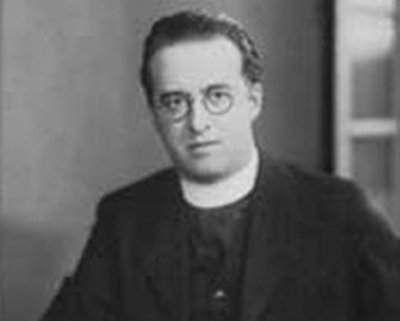
Georges Lemaître (1894–1966) was a Belgian physicist, mathematician, astronomer, and Catholic priest.
He is particularly famous for proposing that the universe is expanding and developing an early version of what later became known as the Big Bang theory.
In 1927, Lemaître published a scientific paper proposing that the universe was expanding, a conclusion connected to the observational work of astronomers studying distant galaxies.
In 1931, he developed the idea that the universe may have originated from an extremely dense early state, which he described as the “primeval atom.”
His work became an important foundation of modern cosmology.
What makes Lemaître especially interesting is that he was both a practising Catholic priest and a leading cosmologist.
However, he strongly resisted attempts to use the Big Bang theory as a scientific proof of religious creation.
He believed that science and theology approached different questions and should maintain their intellectual independence.
For Lemaître, the scientific investigation of the universe and religious reflection about creation were not identical activities.
In 2024, the Vatican highlighted Lemaître as an example of a scientist who maintained a clear distinction between scientific and religious reasoning.
He understood the Big Bang as a scientific hypothesis to be tested through observations, not as a direct demonstration of a theological doctrine.
What can we learn from Lemaître?
His life demonstrates that a religious scientist can accept rigorous scientific investigation without trying to turn scientific discoveries into automatic proofs of religious teachings.
Read more: American Museum of Natural History — Georges Lemaître, Father of the Big Bang | Université catholique de Louvain — Georges Lemaître’s Education.
7. Abdus Salam: The Nobel Prize-Winning Muslim Physicist
Scientific field: Theoretical physics
Religious belief: Devout Ahmadi Muslim
Major achievement: Electroweak unification
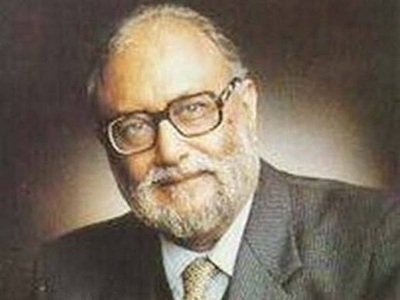
Abdus Salam (1926–1996) was a Pakistani theoretical physicist who became the first Pakistani to receive the Nobel Prize in Physics.
He shared the 1979 Nobel Prize with Sheldon Glashow and Steven Weinberg for their independent contributions to the theory of the unified weak and electromagnetic interaction.
This work became an essential part of the Standard Model of particle physics.
Salam also founded the International Centre for Theoretical Physics (ICTP) in Trieste, Italy, in 1964.
He wanted to help talented scientists from developing countries gain access to advanced scientific education and research opportunities.
His work was particularly important for strengthening scientific research in developing nations.
What makes Abdus Salam especially relevant to discussions about religion and science is that he was a devout Muslim.
In his Nobel biography, Salam is described as a deeply religious person whose faith was inseparable from his scientific and personal life.
He believed that the Qur’an encouraged human beings to observe the natural world and reflect on the laws governing the universe.
Salam viewed the mathematical order of nature as something that inspired appreciation and gratitude toward God.
He also believed that scientific knowledge was not limited to a particular nationality or religion and worked to make advanced research more accessible across the developing world.
What can we learn from Abdus Salam?
Salam’s life is an important example of a Muslim scientist who achieved international recognition through rigorous theoretical physics while remaining deeply committed to his religious beliefs.
His career also demonstrated the importance of education, international collaboration, and investment in scientific institutions.
Read more: Nobel Prize — Abdus Salam’s Biography | American Institute of Physics — Abdus Salam Biography.
Read Here: Famous Muslim Inventions That Shaped the Modern World
8. Charles Townes: The Nobel Physicist Who Saw Meaning in the Universe
Scientific field: Physics
Religious belief: Protestant Christian
Major achievements: Maser and foundational laser technology
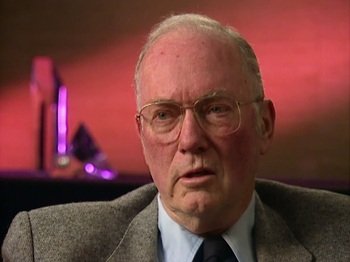
Charles H. Townes (1915–2015) was an American physicist who made major contributions to quantum electronics.
He shared the 1964 Nobel Prize in Physics with Nikolay Basov and Alexander Prokhorov for fundamental work in quantum electronics that led to the construction of oscillators and amplifiers based on the maser-laser principle.
Townes played an important role in developing the maser, a device that amplifies electromagnetic waves using stimulated emission.
His work contributed to the development of laser technology, which later became essential in medicine, telecommunications, manufacturing, scientific research, and consumer electronics.
Townes was also open about his Christian faith.
He described himself as a Protestant Christian and discussed the relationship between science, religion, and spirituality in several interviews.
In a 2005 interview with the University of California, Berkeley, Townes said that he saw science and religion as different but related ways of exploring questions about the universe and human existence.
He also discussed how his religious beliefs influenced his understanding of life, meaning, and creativity.
Townes received the Templeton Prize in 2005 for his contributions to affirming life’s spiritual dimension.
What can we learn from Townes?
He believed that scientific discovery and spiritual reflection could enrich each other. His work also demonstrates that a scientist can maintain religious beliefs while making fundamental contributions to modern technology.
Read more: University of California, Berkeley — Nobel Laureate Charles Townes | Templeton Prize — Charles Townes.
9. Francis Collins: The Geneticist Who Led the Human Genome Project
Scientific field: Genetics and medicine
Religious belief: Christian, evangelical tradition
Major achievements: Human Genome Project leadership and discovery of disease-related genes
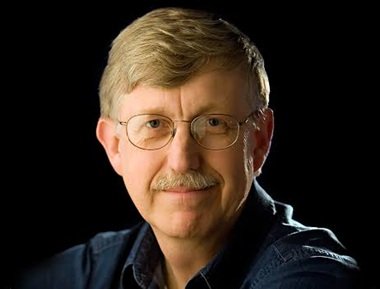
Francis Collins (born 1950) is an American physician-geneticist known for his leadership of the Human Genome Project.
The project was an international scientific effort to determine the sequence of human DNA and identify the genes that make up the human genome.
Collins served as Director of the National Human Genome Research Institute from 1993 to 2008. He later served as Director of the National Institutes of Health from 2009 to 2021.
He also contributed to the discovery of genes associated with several inherited diseases, including cystic fibrosis and Huntington’s disease.
Collins’ personal journey of faith is particularly interesting.
He was not raised in a strongly religious household and described himself as an atheist during his early adulthood.
However, after studying philosophical and religious questions, he eventually became a Christian in his late twenties.
His book The Language of God: A Scientist Presents Evidence for Belief, published in 2006, explains how he came to reconcile his Christian faith with his scientific understanding of biology.
He founded BioLogos to encourage discussions about the relationship between scientific discoveries and Christian belief.
Collins supports evolutionary biology and argues that scientific knowledge does not necessarily contradict religious faith.
In an interview published by the Pew Research Center in 2008, he explained why he did not consider his Christian beliefs incompatible with rigorous scientific research.
What can we learn from Collins?
His career demonstrates that a scientist can accept modern genetics and evolutionary science while maintaining a religious worldview.
He also represents a contemporary example of someone who views science as a way to investigate the natural world and faith as part of a wider understanding of existence and purpose.
Read more: National Institutes of Health — Francis S. Collins | Pew Research Center — The Evidence for Belief: An Interview With Francis Collins | BioLogos — Francis Collins.
10. Blaise Pascal: The Mathematician and Physicist Who Became a Christian Thinker

Scientific field: Mathematics, physics and engineering
Religious belief: Christian, Catholic tradition
Major achievements: Probability theory, Pascal’s law, atmospheric pressure research and the mechanical calculator
Blaise Pascal (1623–1662) was a French mathematician, physicist, inventor, and religious philosopher.
He made important contributions to the mathematical study of probability and the physics of fluids.
Pascal also investigated atmospheric pressure and demonstrated that pressure changes with altitude. His work helped develop the scientific understanding of air pressure and the vacuum.
He designed an early mechanical calculating machine, known as the Pascaline, to help with arithmetic calculations.
However, Pascal was also deeply interested in religious questions.
In November 1654, he experienced an intense religious experience that is often called the “Night of Fire.” This event strengthened his commitment to Christianity.
He later devoted considerable attention to religious and philosophical writing.
His unfinished work Pensées contains reflections on human nature, faith, reason, morality, and the existence of God.
Pascal is particularly famous for an argument known as Pascal’s Wager, which considers the practical question of whether it is rational to believe in God under conditions of uncertainty.
His ideas continue to influence discussions in philosophy of religion.
What can we learn from Pascal?
Pascal’s life shows that scientific investigation, mathematical reasoning, and religious philosophy can all be important parts of one person’s intellectual life.
Read more: Stanford Encyclopedia of Philosophy — Blaise Pascal | Internet Encyclopedia of Philosophy — Blaise Pascal.
What About Albert Einstein? Did He Believe in God?
Albert Einstein (1879–1955) is probably the scientist most frequently quoted in discussions about religion and the existence of God.
Some people describe him as a believer in God, while others present him as an atheist.
Both descriptions can be misleading without explaining what he meant by God.
Einstein admired the philosophical ideas of Baruch Spinoza, who understood God and nature as two expressions of one underlying reality.
Einstein sometimes used religious language to express his admiration for the order, harmony, and rational structure of the universe.
However, he did not believe in a personal God who intervenes in human affairs, answers individual prayers, or makes decisions about people’s lives.
In a 1947 letter, Einstein described his views as close to Spinoza’s conception of God and rejected the conventional idea of a personal deity.
He also made his position clearer in a 1954 letter, stating that he did not believe in a personal God.
Therefore, Einstein is better described as a thinker who admired the intelligibility and order of nature and used the language of Spinoza’s God, rather than a conventional theistic believer.
This distinction is important because belief in an impersonal cosmic order is not the same as belief in the personal God of Christianity, Islam, or Judaism.
Did Einstein believe in God?
He believed in what he called Spinoza’s God, associated with the order and harmony of nature, but rejected belief in a personal God.
What About Charles Darwin? Did the Father of Evolution Believe in God?
Charles Darwin (1809–1882) is another scientist whose religious beliefs are frequently misunderstood.
Darwin developed the theory of evolution by natural selection, explaining how species change over generations and how organisms become adapted to their environments.
His book On the Origin of Species, published in 1859, transformed modern biology.
Darwin was raised in a Christian environment and initially studied theology before pursuing natural history.
Over his lifetime, however, his religious views changed.
In a private letter to John Fordyce dated May 7, 1879, Darwin explained that his judgment about religious belief fluctuated. He stated that he had never been an atheist in the sense of denying God’s existence, but that agnosticism was generally the most accurate description of his position.
This means Darwin should not simply be placed on a list of scientists who firmly believed in God.
His mature views were uncertain and complex.
Darwin also clearly recognized that someone could accept evolution while believing in God. In the same letter, he mentioned the possibility of a committed theist being an evolutionist.
His position is an important reminder that accepting evolutionary science does not automatically make someone an atheist.
Read the original letter: Darwin Correspondence Project, May 7, 1879.
Does Believing in God Make Someone a Better Scientist?
A scientist’s religious beliefs do not automatically make their research more accurate, and being an atheist does not make someone a better scientist.
Scientific achievements are evaluated through the quality of research, evidence, methods, mathematical reasoning, reproducibility, and independent examination.
Newton’s laws of motion are important because they successfully describe physical phenomena within their appropriate range, not because Newton believed in God.
Similarly, Maxwell’s equations are accepted because of their mathematical structure and extraordinary explanatory and predictive success, not because Maxwell was a Christian.
The same principle applies to Abdus Salam’s work in theoretical physics and Francis Collins’ contributions to human genetics.
A scientist’s faith may influence their personal motivation, worldview, or interpretation of existence. But scientific findings must stand on their own evidence.
Read Here: Why Should Scientists Care About Religion?
Why Do Some Scientists Believe in God?
There is no single reason why religious belief appeals to scientists.
Different people have different intellectual, cultural, philosophical, and personal motivations.
Some scientists believe that the mathematical structure of the universe suggests a deeper explanation for existence.
Others find meaning in the apparent order and intelligibility of natural laws.
Some believe that scientific discoveries do not answer every question about human purpose, consciousness, morality, or spiritual reality.
For example, Kepler saw mathematical harmony in the universe as a reflection of divine creation. Abdus Salam understood scientific investigation as an opportunity to reflect on the laws of nature described in the Qur’an. Francis Collins considers scientific discoveries compatible with his Christian faith.
Other scientists reject religious explanations or believe that natural processes are sufficient to explain the observable universe.
Science itself does not require a particular religious position.
Does the Belief of Famous Scientists Prove That God Exists?
The fact that famous scientists believed in God does not scientifically prove that God exists.
Their beliefs are important examples of how scientific achievement and religious conviction can coexist, but personal conviction is not the same as scientific evidence.
Similarly, the fact that some scientists are atheists does not scientifically prove that God does not exist.
These are different questions that should not be confused.
There are at least three separate issues:
- Scientific question: How does the natural world work?
- Philosophical question: Why does anything exist, and what is the ultimate explanation of reality?
- Theological question: Does God exist, and what is the nature of the divine?
Scientific methods are particularly effective for investigating the natural world. Philosophical and theological questions often require additional forms of reasoning.
Some people argue that discoveries about the universe support belief in a Creator. Others believe that natural explanations are sufficient and that supernatural explanations are unnecessary.
The views of individual scientists can help us understand these debates, but they do not settle them.
Read Here: Is There Definitive Proof of the Existence of God?
Frequently Asked Questions (FAQs)
Which famous scientists believed in God?
Several famous scientists held religious or theistic beliefs, including Isaac Newton, Johannes Kepler, Michael Faraday, James Clerk Maxwell, Gregor Mendel, Georges Lemaître, Abdus Salam, Charles Townes, Francis Collins, and Blaise Pascal. Their beliefs differed, ranging from Christian and Muslim theism to particular interpretations of God.
Did Albert Einstein believe in God?
Einstein believed in what he called Spinoza’s God, referring to the rational order and harmony of nature. However, he did not believe in a personal God who intervenes in human affairs. It is therefore misleading to describe him as a conventional theistic believer.
Was Isaac Newton religious?
Yes. Newton had extensive religious and theological interests and believed in a supreme Creator. However, his views were unorthodox because he rejected the traditional Christian doctrine of the Trinity.
Was Abdus Salam a religious scientist?
Yes. Nobel Prize-winning physicist Abdus Salam was a devout Ahmadi Muslim. He believed that the Qur’an encouraged reflection on the laws of nature and saw scientific discovery as an opportunity to appreciate God’s creation.
Was Francis Collins a Christian scientist?
Yes. Francis Collins is a Christian geneticist who led the Human Genome Project and served as Director of the US National Institutes of Health from 2009 to 2021. He has publicly discussed his conversion from atheism to Christianity and believes that science and faith can be compatible.
Did Georges Lemaître believe in God?
Yes. Georges Lemaître was a Catholic priest and cosmologist who developed the primeval atom hypothesis, an important early contribution to the Big Bang theory. He maintained a distinction between scientific explanations of cosmic history and theological ideas about creation.
Was Charles Darwin religious?
Darwin’s religious views changed throughout his life. Although he was raised in a Christian environment, he generally described himself as an agnostic in a private 1879 letter. He also argued that someone could be both an evolutionist and a theist.
Can a scientist believe in God and accept evolution?
Yes. Francis Collins is a prominent example of a Christian scientist who accepts evolutionary biology. Some other religious scientists also accept evolution, although attitudes differ across religious communities and individuals.
Are most famous scientists atheists?
There is no single answer that applies to all scientists or historical periods. Scientists have held many different religious and philosophical positions, including theism, deism, atheism, agnosticism, and nonreligious spirituality.
Does science disprove the existence of God?
Science has not established a general conclusion that God does or does not exist. Scientific research can investigate claims about the natural world, but broader theological and philosophical questions about God’s existence involve additional forms of reasoning and debate.
Conclusion: Science and Faith Can Exist in the Same Intellectual Life
The lives of famous scientists who believed in God demonstrate that scientific achievement and religious conviction are not necessarily incompatible.
Isaac Newton explored the laws of motion while studying theology. Johannes Kepler searched for mathematical harmony in the solar system. Michael Faraday and James Clerk Maxwell made foundational discoveries in physics while maintaining Christian faith. Gregor Mendel conducted pioneering genetic experiments as an Augustinian monk.
Georges Lemaître combined his work in cosmology with his vocation as a Catholic priest. Abdus Salam remained a devout Muslim while transforming theoretical physics, and Francis Collins combined Christian faith with leadership in the Human Genome Project.
Their stories demonstrate that scientists do not all approach questions of existence, meaning, and spirituality in the same way.
However, the most important lesson is not that religious scientists are better than nonreligious scientists, or that their beliefs prove the existence of God.
It is that human beings can approach the natural world through rigorous scientific investigation while holding different philosophical and religious interpretations of existence.
Science asks how the natural world works. Religious and philosophical traditions often explore why existence matters and what it means to be human. Understanding the difference can create a more thoughtful conversation between science and faith.